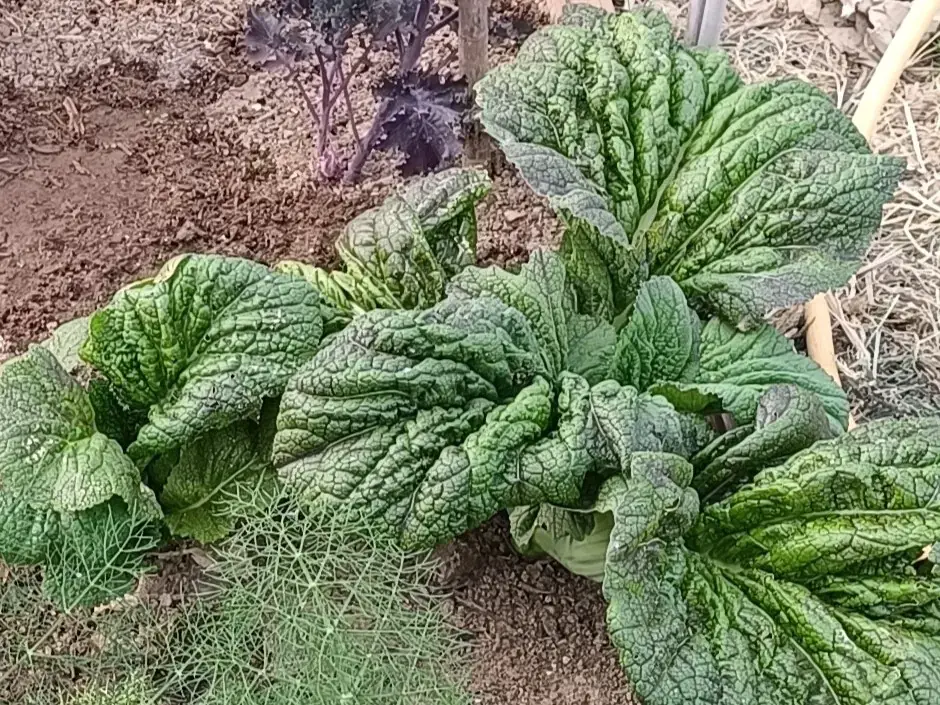
Amsoy King Mustard Rey mostaza

Amsoy King Mustard

Variety: Rey mostaza

Brassica juncea

About this Crop

Amsoy King Mustard (also known as Amsoi or Indian leaf mustard) is a fast-growing leaf mustard variety (Brassica juncea), prized for its characteristic spicy flavor and high productivity. It belongs to the Brassicaceae family, the same as wasabi, cabbage, and broccoli.

It is an annual herbaceous plant with an upright habit reaching 30-60 cm in height. Its leaves are large, oblong, and slightly serrated, of an intense green color, with a firm texture and a characteristic spicy and pungent flavor, due to the presence of glucosinolates, sulfur compounds that also give it its medicinal properties.

It is one of the fastest leafy vegetables to grow: baby leaves can be harvested in 25-30 days and mature plants in 40-50 days from sowing. It is a cool-season crop, ideal for spring and autumn, which tolerates light frosts. Intense heat causes the leaves to become more spicy and bitter, and accelerates bolting.

History & Origin

Leaf mustard (Brassica juncea) is native to the Himalayan region in the Indian subcontinent, where it has been cultivated for over 4,000 years. It is one of the oldest brassicas cultivated by humans, valued both for its spicy leaves and for its seeds used in mustard condiment production.

The Amsoy variety (also spelled Amsoi) is a traditional leaf mustard variety very popular in Surinamese cuisine, brought to the Caribbean by Indian workers during the colonial era. In Suriname, Amsoi is an essential ingredient in dishes such as roti and bami goreng.

The name King Mustard is a commercial designation highlighting its superior quality and productivity. Leaf mustard has spread throughout the world via migratory and trade routes, adapting to numerous cuisines: from Indian sarson da saag to Korean kimchi, through Chinese stir-fries and Western salads. It is a plant that has transcended cultural boundaries, becoming a global ingredient.

Ideal Companions

LettuceSpinachBeetrootOnionGreen beanPeaCarrot

Avoid

CabbageBroccoliCauliflowerBrussels sproutsKaleArugula

Superfood

Leaf mustard is a food of high nutritional density and very low caloric intake (approximately 27 kcal per 100 g). It is exceptionally rich in vitamin K (one cup covers more than 600% of the daily intake), vitamin A in the form of beta-carotenes, and vitamin C. It also provides calcium, iron, potassium, and fiber. It contains glucosinolates, bioactive compounds with antioxidant and anti-inflammatory properties that have been linked to the prevention of certain types of cancer. Its characteristic spicy flavor comes from isothiocyanates, released when chewing or cutting the leaves.

Preservation

Mustard leaves keep in the refrigerator for 3 to 5 days wrapped in a damp cloth inside a perforated plastic bag. It is recommended to consume them as soon as possible, as they lose their characteristic spiciness over time. For longer preservation, they can be blanched (2 minutes) and frozen, although they lose some of their texture and spiciness. They can also be pickled or fermented in Korean style (mustard kimchi).

Pest Monitoring

Pay special attention to: Aphid, caterpillar, flea beetle, downy mildew, slug.

FAQ

The leaves are too spicy, can the flavor be softened

Yes, the spiciness is reduced by cooking the leaves and discarding the cooking water. It can also be softened by sautéing with onion, garlic, or sweet ingredients. Younger, tender leaves are less spicy than mature ones.

Can it be grown in a pot

Yes, leaf mustard adapts well to pots of at least 20 cm depth. It needs fertile substrate and abundant watering. Being fast-growing, it is ideal for growing in pots on balconies and terraces.

Is it the same as the yellow mustard on hot dogs

No. Yellow mustard is made from white mustard seeds (Sinapis alba), while Amsoy is a leaf mustard (Brassica juncea) consumed as a vegetable. They are different plants with different uses.

Can the leaves be eaten raw or cooked

Both. Young, tender leaves can be eaten raw in salads, providing a spicy touch similar to arugula. Mature leaves are recommended to be cooked to soften their flavor and texture.

Notas

Amsoy King Mustard is one of the fastest and most productive leafy vegetables you can grow, ideal for those looking for quick results in the garden. Its spicy flavor makes it an excellent substitute for arugula or wasabi in salads and dishes. People taking anticoagulant medication should consider its high vitamin K content. Being a cool-season crop, it is perfect for filling the garden in autumn and spring months when other summer vegetables are no longer producing.