Giant Pumpkin of Letux - Complete Growing and Care Guide Gigante de Letux (Full Moon)

Giant Pumpkin of Letux - Complete Growing and Care Guide

Variety: Gigante de Letux (Full Moon)

Cucurbita maxima

About this Crop

The Giant Pumpkin of Letux (Cucurbita maxima) is a crop from the cucurbit family based on the Full Moon variety, one of the most spectacular white-skinned giant pumpkins. It is grown in the Zaragoza municipality of Letux (Campo de Belchite, Aragón), where the conditions of hot summers and fertile soils along the Aguasvivas riverbank have made it a local tradition among giant vegetable enthusiasts.

It is a plant of trailing and extremely vigorous habit, whose main vines can reach between 5 and 10 metres in length. Its leaves are enormous, heart-shaped, dark green, and rough to the touch. The flowers are large, of a bright yellow colour, and require insect or hand pollination to ensure fruit set. Each plant is grown to produce one or two fruits, concentrating all resources on achieving maximum size.

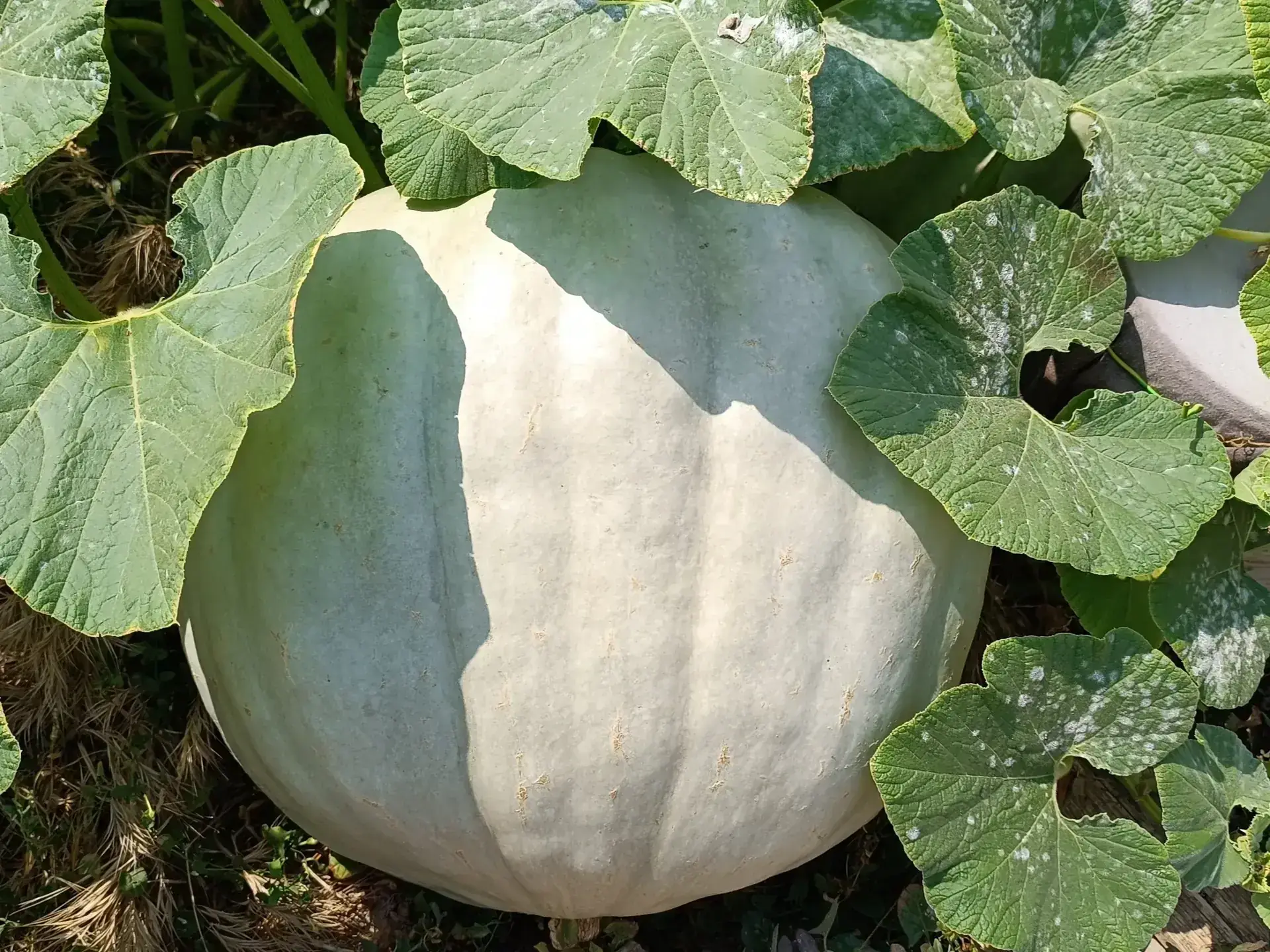
The fruits are rounded and quite uniform in shape, with a smooth skin of pure white to ivory colour, reminiscent of a full moon —hence the variety's name. Typical weight is between 27 and 40 kg, although with intensive care they can exceed 90 kg. The flesh is yellow, dense, and edible, although its main value is ornamental and for competition. The complete cycle from sowing to harvest is approximately 110 days.

History & Origin

The Full Moon variety is an American commercial cultivar of Cucurbita maxima, selected specifically for its aesthetic characteristics: bright white skin, round and uniform shape, and large size. Its name directly alludes to its appearance —a white sphere reminiscent of the full moon in the night sky.

Unlike other giant pumpkins such as the Atlantic Giant (orange, focused on weight records), the Full Moon stands out for its ornamental value. It is highly prized in autumn decoration, Halloween carving, and as a "white canvas" for painting designs. It is also grown for size competitions, although it does not usually reach the record weights of competitive orange varieties.

In Letux (Zaragoza), the conditions of the Ebro valley —long, hot summers, fertile soils, and availability of irrigation water— are exceptionally favourable for this crop. Local farmers and enthusiasts have adopted the Full Moon as a distinctive tradition, competing at regional fairs and participating in events such as the International Giant Pumpkin Fair of Valtierra (Navarre), the reference event in Spain for this discipline.

Ideal Companions

CornBeanOnionCalendulaNasturtiumDill

Avoid

PotatoCucumberMelonWatermelonZucchiniOther cucurbits

Superfood

Like all pumpkins of the Cucurbita maxima species, the Giant of Letux is a low-calorie food (approximately 26 kcal per 100 g) and rich in water (90-94%). It provides beta-carotenes (provitamin A), responsible for its orange colour, as well as potassium, fibre, and vitamin C. Its flesh is more watery than that of traditional winter squashes, but it remains an excellent base for creams, purées, and baking. It is naturally gluten-free and very digestible.

Preservation

Once harvested, the pumpkin should be cured in the sun for 7-10 days to harden the skin. It is then stored in a cool (10-15 °C), dry, and well-ventilated place, preferably on a pallet or straw bed to avoid direct contact with the ground. Under optimal conditions, a giant pumpkin can be stored for 3 to 6 months. Due to its enormous size, if cut for consumption it must be processed immediately (freezing, preserving, or eating fresh in the following days). Pumpkins destined for competition are handled with extreme care to avoid damaging the skin.

Pest Monitoring

Pay special attention to: Aphid, powdery mildew, red spider mite, whitefly, cucumber beetle, vine borer.

FAQ

How much can it weigh?

With the right conditions and Atlantic Giant genetics, a well-cared-for pumpkin can exceed 500 kg. The current world record is above 1,200 kg. In the Ebro valley, specimens of over 400 kg have been recorded in official competitions.

Can you eat a pumpkin that big?

Yes, the flesh is perfectly edible, although it is more watery than that of traditional winter squashes. It is ideal for creams, purées, and baking. That said, once cut it must be processed quickly because its high water content makes it more perishable.

Does it need a lot of space?

A huge amount. A minimum of 30-40 m² per plant is recommended. The vines can spread up to 10 metres in all directions. It is not a suitable crop for small gardens or containers.

Why is only one fruit grown per plant?

For the pumpkin to reach gigantic sizes, all the plant's resources (water, nutrients, photosynthesis) must be concentrated on a single fruit. If several are left, the plant divides its energy and none reaches an exceptional size.

Notas

The Giant Pumpkin of Letux, with its characteristic ivory-white skin, represents the fusion between American ornamental genetics and Aragonese agricultural know-how. Its light colour makes it unique among giant pumpkins —where oranges predominate— and makes it a centrepiece both at competition fairs and in autumn decoration. In Letux, this crop has become a source of local pride that demonstrates that giant pumpkins can also be grown in Aragón... and white ones at that!