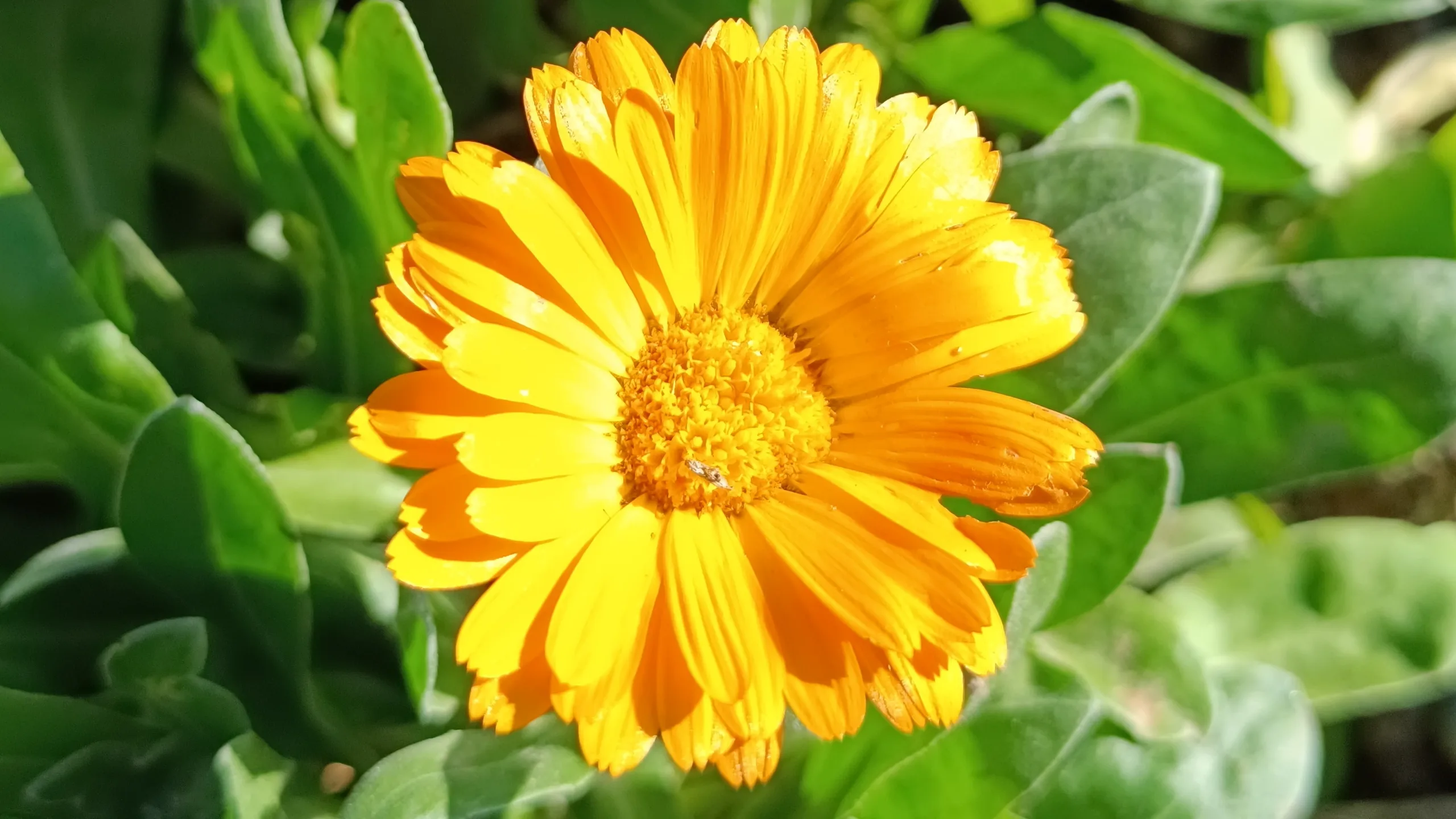
Calendula - Complete Guide Common calendula

Calendula - Complete Guide

Variety: Common calendula

Calendula officinalis L.

About this Crop

Calendula (Calendula officinalis) is an annual or biennial herb in the Asteraceae family. It forms branched plants 20 to 50 cm tall with slightly sticky, oblong leaves. Flower heads are about 4 to 8 cm wide and range from yellow and gold to orange, sometimes with a red reverse.

It grows quickly, is easy to cultivate, and flowers for months when spent blooms are removed. It suits borders, vegetable gardens, containers, and cut-flower planting. It is not the same plant as French marigold, which belongs to Tagetes.

History & Origin

Calendula has been cultivated for centuries in Europe and the Mediterranean. Its name is linked to the Latin calendae, since it can flower through many months of the calendar. It was used as an ornamental, dye, and traditional herbal plant. Petals were also used to colour food and textiles and as a cheaper saffron substitute.

Ideal Companions

TomatoBeanPeaCarrotLettuceStrawberry

Avoid

Waterlogged soilexcess nitrogendeep shadeplants treated with unauthorised pesticides

Superfood

Petals grown specifically for food provide small amounts of carotenoids and phenolic compounds, but they are not a major nutrient source. People allergic to Asteraceae may react. Medicinal use does not replace professional advice.

Preservation

Pick flower heads on dry days after dew has evaporated. Dry them in a single layer in a dark, ventilated place and store them airtight away from light. Fresh flowers do not last long, so use them promptly.

Pest Monitoring

Pay special attention to: Aphid, whitefly, thrips, slug, snail, powdery mildew.

FAQ

**Are calendula petals edible?** Identified petals grown for food may be used in small amounts; treated flowers must not be eaten.
**Can it be sown in autumn?** Yes, in mild climates for early spring flowers.
**Does it need much water?** It needs moisture to establish but tolerates moderate dryness later.
**Why does flowering stop in summer?** Heat, drought, excess nitrogen, and seed formation can reduce flowering.

Notas

Calendula attracts bees, hoverflies, and other beneficial insects. It may self-seed readily, and seedlings may differ from commercial selections. People allergic to daisies, chrysanthemums, or ragweed should handle it carefully.