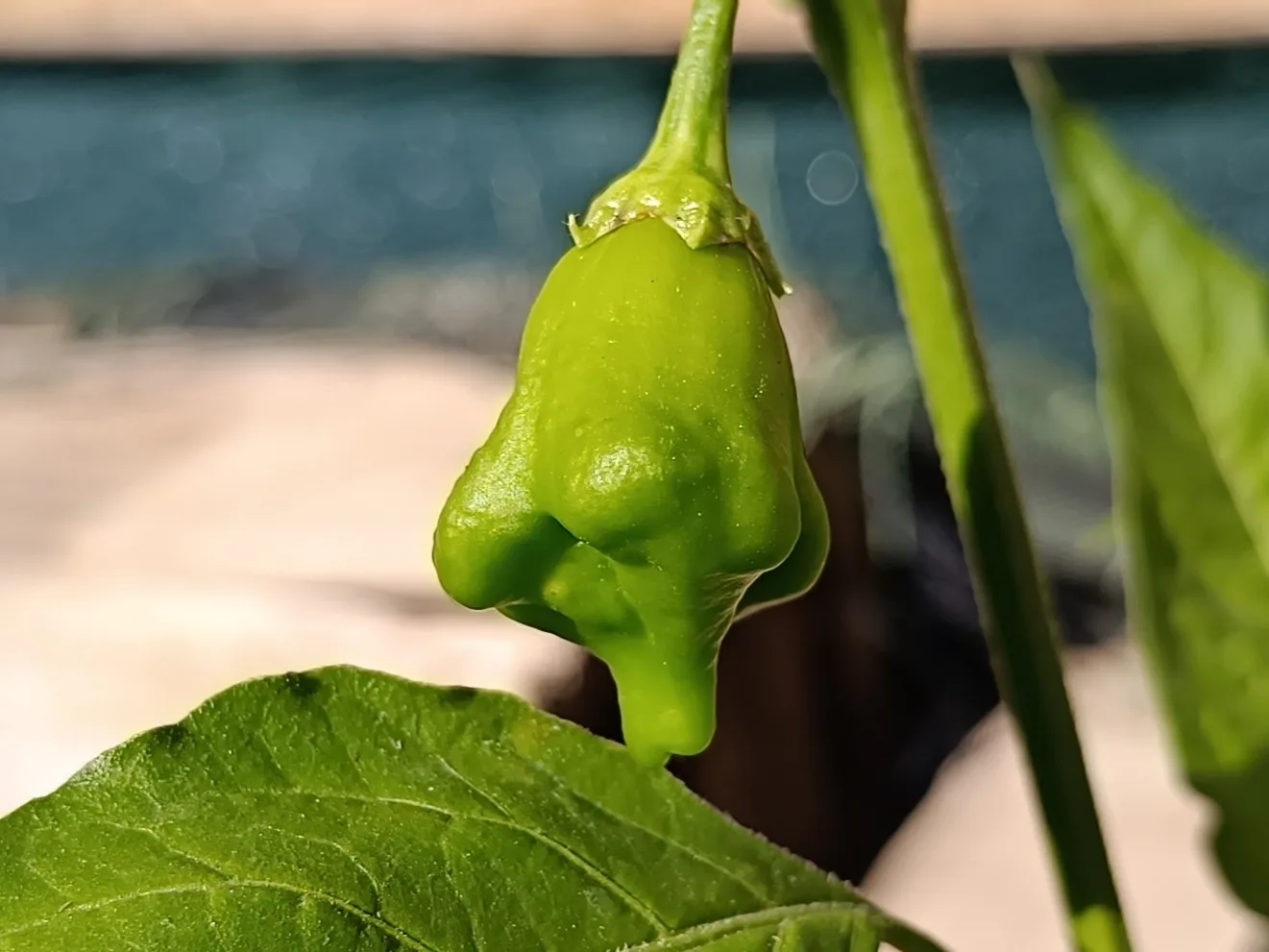
Bishop’s Crown Pepper Bishop’s Crown (Crown Bishop)

Bishop’s Crown Pepper

Variety: Bishop’s Crown (Crown Bishop)

Capsicum baccatum var. pendulum

About this Crop

Bishop’s Crown, also listed as Bishop Crown or Crown Bishop, is a chilli pepper of Capsicum baccatum, usually classified as C. baccatum var. pendulum. Its name refers to the fruit’s bell-like, three-lobed shape, reminiscent of a bishop’s mitre or crown. The fruits hang from the plant and ripen from green to red. They are fleshy and fruity, with variable heat listed in seed catalogues at about 5,000–30,000 Scoville units. Heat varies between seed lots and growing conditions.

The plant is vigorous and long-season, with pale flowers that often have yellow or green markings on the petals. In warm conditions it can grow over a metre tall and produce fruit through much of summer and autumn. It needs a warm growing season; in cooler regions it usually performs better under cover or in a greenhouse.

History & Origin

Capsicum baccatum is native to South America. Genetic-diversity studies place its probable centre of origin in Bolivia and southern Peru and estimate domestication at about 4,500 years ago. However, the distribution of cultivated types points to multiple lineages and possible domestication centres. The species remains important in Andean and South American cooking, where it is widely known as ají.

Bishop’s Crown is a cultivated type within this species. Seed catalogues often give Barbados as the origin of the variety, but this commercial provenance should not be confused with the South American origin of the species. Its unusual shape has inspired names such as “bishop’s hat” and “bishop’s crown” in different languages.

Ideal Companions

BasilOnionGarlicCarrotLettuceCalendula

Avoid

PotatoTomatoEggplantOther peppersFennel

Superfood

The exact nutritional profile depends on ripeness and the heat of each fruit. Like other chillies, it may provide vitamin C, provitamin A as carotenoids, and capsaicinoids, which cause the heat. Capsaicin concentration cannot be inferred from the crown shape alone, and published Scoville figures for this variety are estimates, not measurements of these particular fruits.

Preservation

Fresh fruit keeps for several days in the refrigerator; do not wash it until use. For longer storage, dry whole or split fruit in a ventilated place, dehydrate gently, freeze it clean and dry, or pickle it using a tested recipe. Wear gloves when handling ripe chillies and avoid touching your eyes. Heat may be concentrated in the inner membranes, so taste a small amount when cooking.

Pest Monitoring

Pay special attention to: aphids, whiteflies, thrips, spider mites, leaf miners, bacterial spot.

FAQ

Is Bishop’s Crown very hot?

Its heat is usually described as moderate, with commercial listings giving roughly 5,000–30,000 Scoville units. Heat varies between plants and fruits; tasting a small piece is the safest way to assess a particular lot.

How long does it take to produce ripe fruit?

Catalogues give about 90 days from transplanting to maturity, though cool weather and limited light can lengthen the cycle. This period is not counted from sowing.

Why do the fruits look like a crown?

The lower part widens into several lobes, creating a bell-like outline reminiscent of a crown or mitre.

Can it be grown in a pot?

Yes, in a roomy, well-drained pot, with a stake if needed and several hours of direct sun. In cool climates, a sheltered spot helps the fruit ripen.

Can the seeds be saved?

Yes, provided the plant is not an F1 hybrid and crossing with nearby peppers is prevented. Check the seed packet and dry seeds completely before storing them.

Notas

Seed sellers use several name variants: Bishop’s Crown, Bishop Crown, Bishops Crown and Crown Bishop. The “90 days” listed by some suppliers is usually counted from transplanting, not sowing. Scoville ratings are approximate and vary by supplier. To save true-to-type seed, isolate flowers or separate chilli varieties that flower at the same time.