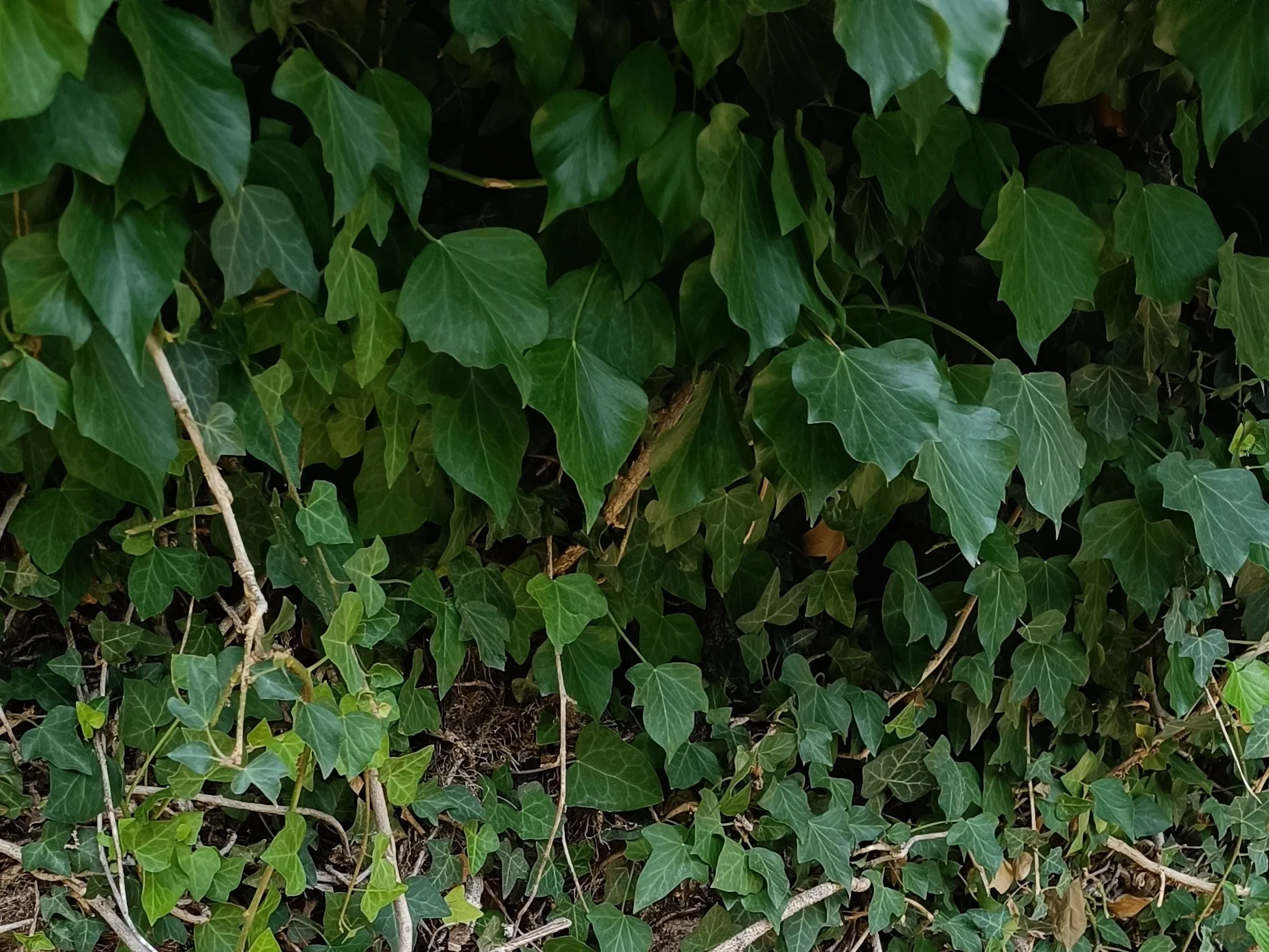
Common Ivy - Complete Guide English ivy

Common Ivy - Complete Guide

Variety: English ivy

Hedera helix L.

About this Crop

Common ivy (Hedera helix) is a perennial evergreen climber in the Araliaceae family. Young stems attach to surfaces with aerial roots and carry glossy, dark-green, lobed leaves. Mature plants can produce non-climbing flowering branches with more entire leaves and small flowers.

Flowers appear in autumn and develop into black or bluish berries that ripen in winter and may remain until spring. Ivy can cover the ground, climb walls, grow in containers, or form dense foliage. It tolerates shade and moderate drought, but its vigorous growth needs regular control.

History & Origin

Common ivy is native across much of Europe and also occurs in western Asia and North Africa. Its evergreen foliage has symbolised permanence in several European traditions. It was associated with Dionysus in antiquity. Today it provides cover, nectar for late insects, and winter food for birds, although its spread must be managed.

Ideal Companions

FernHostaPeriwinkleLaurelHollyMoss

Avoid

Young treesdamaged wallswaterlogged soilaccess by children and animals

Superfood

Ivy is not a food plant. Its leaves and berries contain saponins and other irritating or toxic compounds. Berries may cause digestive symptoms and must not be eaten by people or pets.

Preservation

Cut branches last several days in water and can be used in arrangements. Leaves and berries are not edible and must be kept away from food. Propagation is usually done with semi-ripe cuttings; seed is slower and may need stratification.

Pest Monitoring

Pay special attention to: Aphid, scale insect, red spider mite, thrips, leaf spot, powdery mildew, root rot.

FAQ

**Does ivy damage trees?** It is not parasitic, but it can add weight, cover branches, and compete with weak or young trees for light and water.
**Is it toxic?** Yes. Leaves and berries can harm people and pets if eaten.
**Can it grow indoors?** Yes, with bright indirect light, moderate watering, and careful pest monitoring.
**How is it propagated?** Most easily by stem cuttings or layering.

Notas

Ivy is useful as ground cover in shade and as wildlife habitat, but it needs clear boundaries and regular pruning. Do not plant it beside damaged structures or where it can enter gutters and roofs. The juvenile climbing form differs from the mature flowering form, which may have more entire leaves.