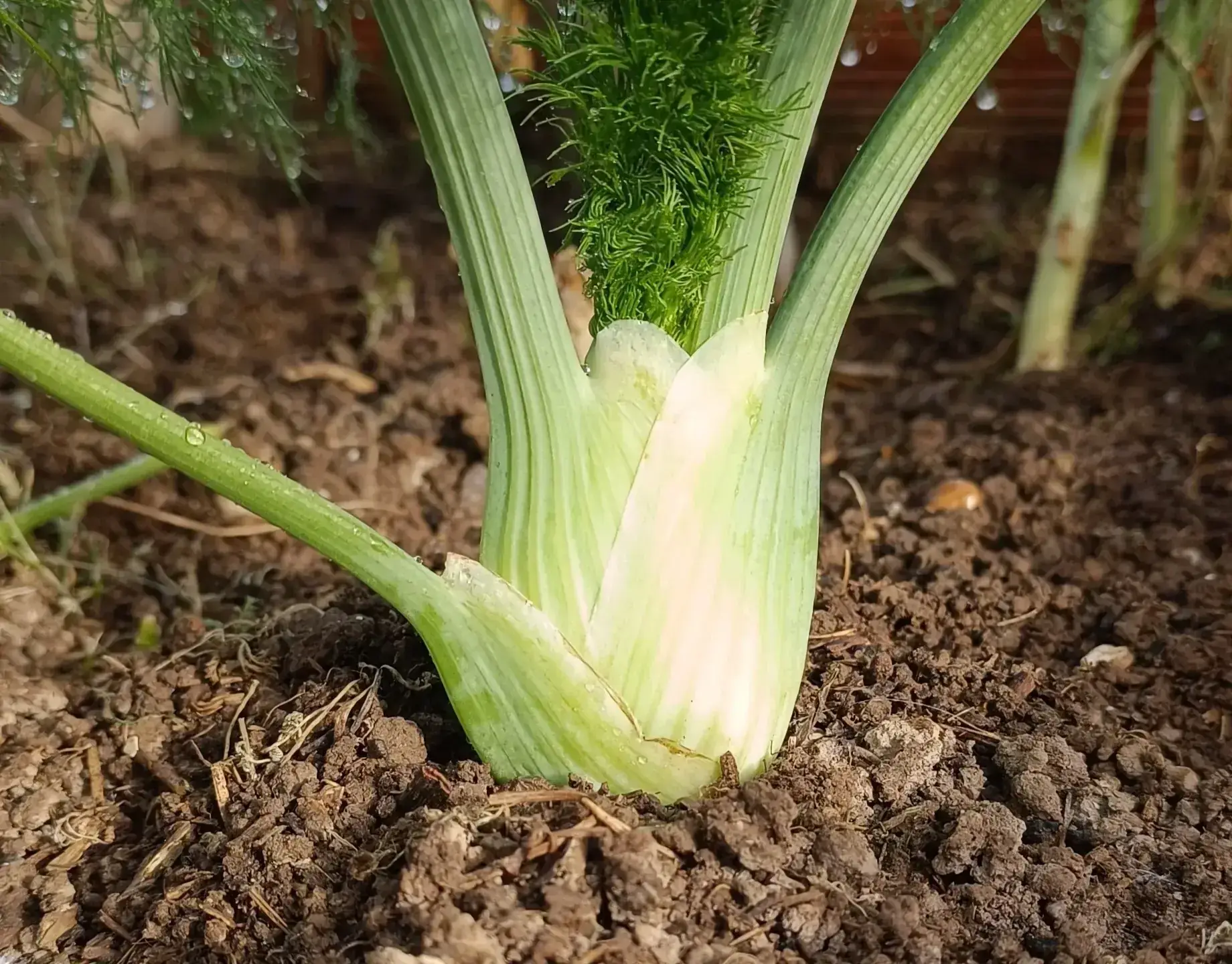
Florence Fennel de Florencia

Florence Fennel

Variety: de Florencia

Foeniculum vulgare var. azoricum

About this Crop

Florence fennel (Foeniculum vulgare var. azoricum), also known as finocchio or bulb fennel, is a fennel variety specifically selected for its edible bulb — a base of overlapping fleshy leaves that swells forming a bulbous structure, tender and crunchy, whitish-green in color with a characteristic aniseed and sweet flavor.

It is a biennial herbaceous plant grown as an annual, belonging to the Apiaceae (umbellifer) family, the same as parsley, celery, carrot, and dill. Its stems are erect, striated, and branched, reaching 60-100 cm in height when flowering. The leaves are finely divided into filiform segments, bright green, with a very ornamental feathery appearance. The flowers are grouped in compound umbels of yellow color.

Unlike wild fennel (Foeniculum vulgare), which is grown for its aromatic seeds and leaves, Florence fennel develops a tender bulb that constitutes its main culinary use. It is an allelopathic plant: it releases substances that inhibit the growth of many other plants, so planning is required in crop rotation and association.

History & Origin

Fennel is native to the Mediterranean basin, where it has been cultivated and used since classical antiquity. The Greeks knew it as marathron and associated it with victory — indeed, the Battle of Marathon (490 BC) takes its name from the field of fennel (marathos) where it was fought. The Romans introduced it throughout Europe, valuing it for both its culinary and medicinal properties.

The Florence variety (also called finocchio) was developed in Italy during the Renaissance, where Tuscan horticulturists selected plants that produced a more pronounced and tender basal swelling. Florence, known for its horticultural tradition, gave its name to this variety which became an emblematic ingredient of Italian cuisine.

In traditional medicine, fennel has been used for centuries as a carminative (against gas), galactagogue (to stimulate breast milk production), and digestive. Pliny the Elder and Dioscorides already mentioned its therapeutic properties in their writings. In the Middle Ages, fennel was one of the nine Anglo-Saxon sacred herbs and was hung over doors to ward off evil spirits.

Ideal Companions

LettucePeaCucumberMarigold

Avoid

TomatoBeanPepperEggplantWild fennelDill

Superfood

Florence fennel is a low-calorie food (approximately 31 kcal per 100 g) and an excellent natural diuretic. It is a good source of dietary fiber, beneficial for digestive health, and vitamin K, essential for blood clotting and bone health. It also provides vitamin C, with antioxidant action, and potassium, important for muscle and cardiovascular function. It contains manganese, copper, and small amounts of calcium and iron. Its volatile compounds (anethole, estragole, and fenchone) give it its carminative and digestive properties.

Preservation

The fennel bulb keeps in the refrigerator for 5 to 7 days wrapped in a damp cloth or in a perforated plastic bag. For longer preservation, it can be sliced and frozen, although it loses some of its crunchy texture. It can also be preserved in pickle (in vinegar with spices) or dehydrated for use as a flavoring. The feathery leaves keep best in a glass of water, like cut flowers.

Pest Monitoring

Pay special attention to: Aphid, slug, snail, caterpillar.

FAQ

Why doesn't my fennel form a bulb

The most common causes are: water stress (irregular watering), temperatures too high causing premature bolting, sowing at the wrong time, or soil too compact preventing swelling.

Can it be planted near other vegetables

Fennel is allelopathic, meaning it releases substances that inhibit the growth of many plants, especially tomatoes, beans, and peppers. It's best to give it its own space or plant it only with lettuce and peas.

The raw bulb tastes too strong

If the aniseed flavor is intense, it can be softened by slicing it very thin and letting it rest with ice and lemon for 10 minutes before consuming. When cooked, the flavor becomes much milder and sweeter.

Can Florence fennel seeds be used

Yes, if the plant is allowed to flower, it produces seeds that can be collected and used as a spice. But if the goal is the bulb, it must be harvested before the plant bolts.

Notas

Florence fennel is one of the most appreciated vegetables in Italian cuisine and an essential ingredient in dishes such as insalata di finocchi and finocchi gratinati. Its cultivation requires more attention than other vegetables due to its sensitivity to stress and its tendency to bolt, but the result is worth it. It is an excellent choice for autumn and winter gardens in Mediterranean climates. Swallowtail butterflies (Papilio machaon) lay their eggs on fennel leaves — if caterpillars appear, they can be transferred to a wild fennel plant to avoid damaging the crop.