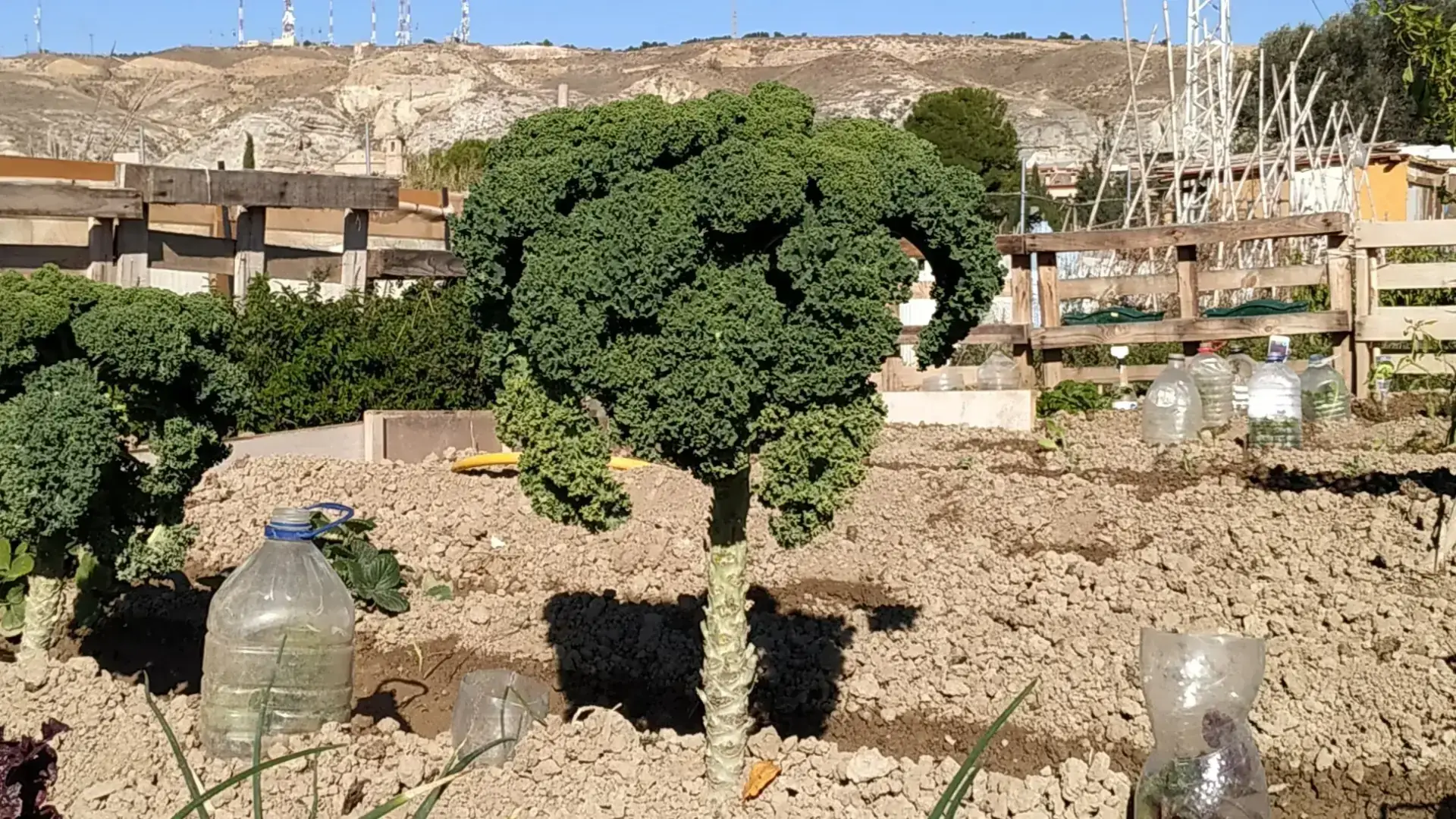
Dwarf Green Curled Kale Dwarf Green Curled

Dwarf Green Curled Kale

Variety: Dwarf Green Curled

Brassica oleracea var. sabellica

About this Crop

Dwarf Green Curled Kale is a traditional kale variety with a compact, dwarf habit, reaching 30-60 cm in height, ideal for home gardens and container growing. It belongs to the Brassicaceae (cruciferous) family, the same as broccoli, cauliflower, and cabbage.

Its leaves are intensely curly and crinkled, of a deep dark green color, with finely curled edges that give it a very distinctive ornamental appearance. Unlike other kale varieties, its compact growth requires less space and makes it especially resistant to wind.

It is a biennial plant grown as an annual, known for its extraordinary cold resistance, withstanding frosts down to -15°C. In fact, intense cold transforms some of its starches into natural sugars, significantly improving its flavor and making it sweeter. Its optimal season is autumn and winter, when other vegetables are no longer producing.

History & Origin

Kale is one of the oldest forms of brassica cultivated by humans, with origins dating back to ancient Greece and Rome, where leafy cabbage varieties were already consumed. For centuries, it was a winter subsistence crop in northern Europe, especially in Germany, the Netherlands, and Scotland, where its cold resistance made it one of the few sources of fresh vegetables during harsh winters.

The Dwarf Green Curled variety is a traditional compact selection that became popular in Great Britain and the United States during the 19th century. Thomas Jefferson, the third president of the United States and an avid horticulturist, grew several varieties of kale in his garden at Monticello.

Kale experienced a global resurgence at the beginning of the 21st century when it was rediscovered as a superfood for its exceptional nutritional properties. It went from being a forgotten vegetable to becoming an icon of healthy eating, appearing on haute cuisine menus and in smoothies around the world.

Ideal Companions

GarlicOnionLeekLettuceBeetrootMarigoldNasturtiumDillSageRosemary

Avoid

CabbageBroccoliCauliflowerBrussels sproutsStrawberry

Superfood

Kale is considered a superfood for its exceptional nutritional density with very low caloric intake. It is one of the richest plant sources of vitamin K (fundamental for blood clotting), far surpassing most vegetables. It is also an excellent source of vitamin C (more than orange), vitamin A as beta-carotenes, and vitamin B6. It provides fiber, calcium (more bioavailable than milk calcium), potassium, iron, magnesium, and manganese. It also contains lutein and zeaxanthin, carotenoids beneficial for visual health, and glucosinolates, sulfur compounds with anti-inflammatory properties. A cup of raw kale provides only about 33 calories.

Preservation

Kale leaves keep in the refrigerator for 3 to 5 days in a perforated plastic bag or airtight container. It is not recommended to wash them until use to prevent fungal growth. For longer preservation, they can be blanched (2-3 minutes in boiling water) and frozen, keeping perfectly for several months. They can also be dehydrated to make crispy kale chips, which keep for weeks in an airtight container.

Pest Monitoring

Pay special attention to: Aphid, caterpillar, whitefly, flea beetle, leaf miner.

FAQ

Is kale the same as collard greens

They are close relatives (both are Brassica oleracea), but kale has curly and crinkled leaves, while collard greens have smooth, large leaves. Kale is more tender and has a milder flavor.

Can it be grown in a pot

Yes, the Dwarf Green Curled variety is ideal for pots due to its compact habit. It needs a pot of at least 25 liters capacity, nutrient-rich substrate, and regular watering.

Does cold damage the plant

No, on the contrary. Kale is extremely cold-resistant, and frosts improve its flavor by converting starches into sugars. It can withstand temperatures down to -15°C without problems.

Why does my kale turn yellow

Usually due to lack of nitrogen (needs fertilizer rich in this nutrient), excess watering, or lack of sun. It may also indicate that the plant has reached the end of its cycle.

Notas

Dwarf Green Curled Kale is one of the most productive vegetables in limited space: a single plant can produce leaves for 6-8 months if harvested correctly. It is an excellent option for winter gardens, when most summer crops have finished. It is also known as curly kale or simply curled kale. Its ornamental value makes it suitable for edible gardens and decorative borders. People taking anticoagulant medications should maintain consistent kale consumption due to its high vitamin K content.