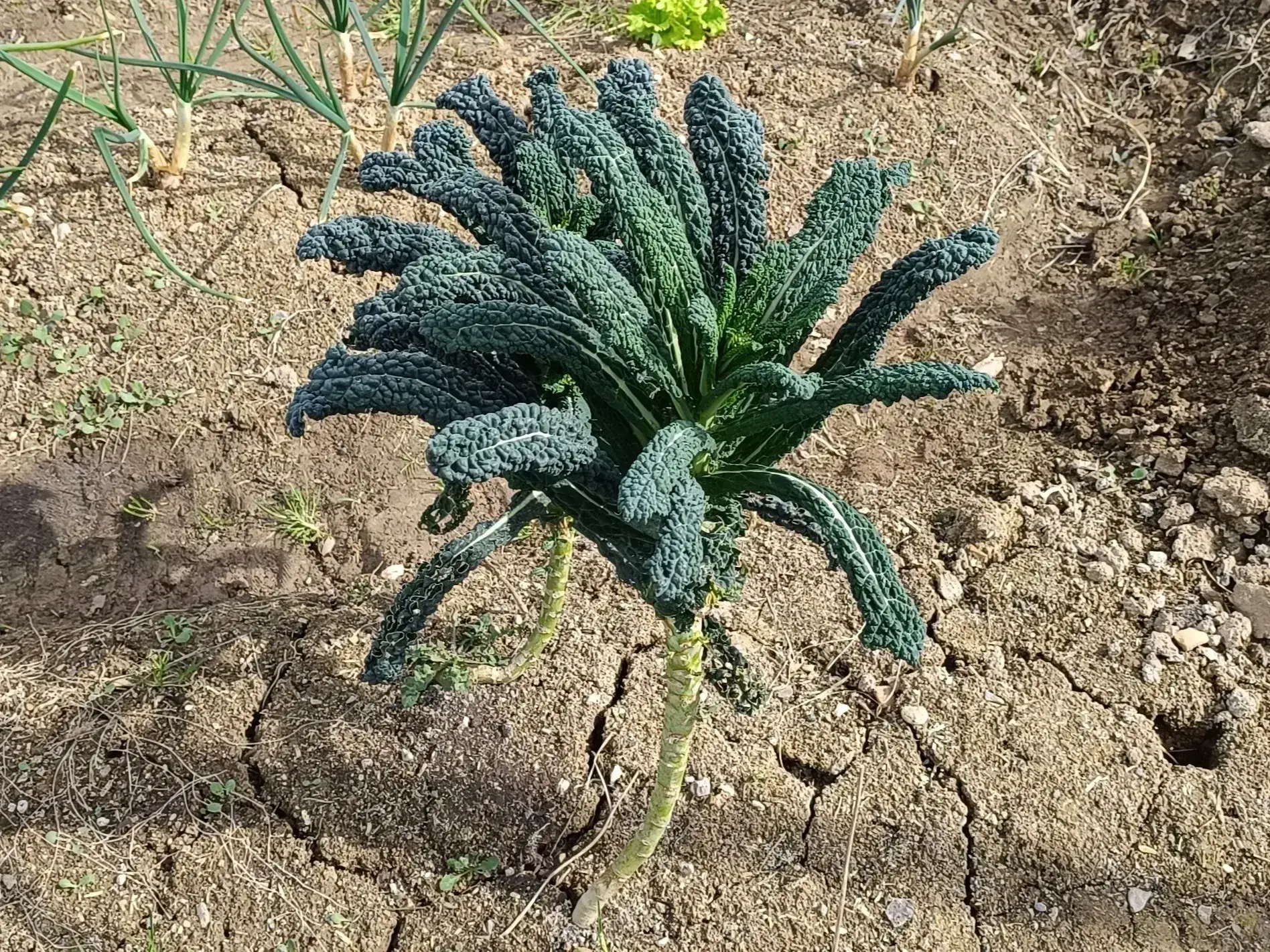
Nero di Toscana Kale Nero di Toscana

Nero di Toscana Kale

Variety: Nero di Toscana

Brassica oleracea var. sabellica

About this Crop

Nero di Toscana Kale, also known as cavolo nero, lacinato kale, dinosaur kale, or dragon kale, is a traditional Italian (heirloom) variety of leaf cabbage, famous for its primitive and ornamental appearance and its earthy and sweet flavor, considered the finest among kales.

It belongs to the Brassicaceae family, the same as broccoli, cauliflower, and cabbage. It is a biennial plant grown as an annual, with an upright, vertical habit, reaching 60-90 cm in height, resembling a small palm tree. Its leaves are the most distinctive feature: long, narrow, and bumpy, with a blistered texture evoking dinosaur skin, of an intense dark bluish-green color, almost black, hence its name cavolo nero (black cabbage in Italian).

It is a plant of slow but constant growth, very cold-resistant (withstands frosts down to -15°C). Frosts significantly improve its flavor by converting starches into sugars, making it sweeter. It is the least bitter kale variety of all, with a deep, earthy, and slightly sweet flavor that makes it the queen of Tuscan cuisine.

History & Origin

Cavolo nero is a variety with a history dating back at least to the 18th century in the Tuscany region, Italy, where it has been grown for generations in the family gardens (orti) surrounding Tuscan cities and towns. It is a symbol of cucina povera (humble cuisine) Italian, where simple ingredients are transformed into iconic dishes.

Its most emblematic dish is ribollita, a thick soup of vegetables, bread, and beans that was cooked and reheated ("reboiled") over several days, improving with each reheating. Cavolo nero is the essential ingredient that gives it its unmistakable character and flavor.

The variety reached the United States in the 18th century, where Thomas Jefferson recorded its cultivation at Monticello (Virginia) in the year 1777. In recent decades, cavolo nero has experienced a global resurgence, going from a traditional Italian vegetable almost unknown outside Tuscany to becoming a trendy ingredient in international cuisine, valued for both its flavor and its spectacular ornamental appearance.

Ideal Companions

GarlicOnionLeekDillRosemarySageMintMarigoldNasturtium

Avoid

CabbageBroccoliCauliflowerBrussels sproutsStrawberryArugula

Superfood

Cavolo nero is one of the most nutritious leafy vegetables in existence. It is exceptionally rich in vitamin K (one cup provides over 600% of the recommended daily intake), essential for blood clotting and bone health. It is also an excellent source of vitamin A as beta-carotenes, vitamin C, and manganese. It provides highly bioavailable calcium, iron, fiber, and potassium. It contains antioxidants such as lutein, zeaxanthin, and kaempferol, which protect eye and cardiovascular health. All with a very low caloric intake (approximately 30 kcal per 100 g).

Preservation

Cavolo nero leaves keep in the refrigerator for 5 to 7 days in a perforated plastic bag with a damp cloth. Do not wash until use. For longer preservation, they can be blanched (2-3 minutes in boiling water) and frozen, keeping up to 8 months. They can also be dehydrated to make crispy chips that keep for weeks in an airtight container. In traditional Tuscan cuisine, the larger, tougher leaves are used to flavor broths and then discarded.

Pest Monitoring

Pay special attention to: Aphid, caterpillar, whitefly, downy mildew, slug.

FAQ

Is it the same as normal curly kale

No. Nero di Toscana has long, narrow, bumpy leaves of dark green color, while curly kale has curly, lighter green leaves. Cavolo nero's flavor is more earthy, sweet, and less bitter.

Can it be eaten raw

Yes, young, tender leaves can be eaten raw in salads, though it's advisable to massage them with oil and lemon to soften them. Mature leaves are tougher and recommended to be cooked.

Does it grow in winter

It is one of the vegetables that best resists winter. Intense frosts not only don't damage it but improve its flavor. It is mainly harvested from October to March.

When it gets very tall, should I prune it

Pruning is not necessary. Simply harvest the lower leaves as needed and the plant continues growing upwards, producing new leaves from the center for months.

Notas

Cavolo nero is considered by many chefs and gardeners as the best kale for cooking due to its firm texture that doesn't fall apart when cooked and its deep, balanced flavor. Its upright habit and striking foliage make it an ornamental plant ideal for borders and edible gardens. Unlike curly kale, its smooth leaves are easier to clean and process. It is said in Tuscany that cavolo nero improves after each frost and that ribollita tastes better the day after it's made.