Japanese Striped Maize - Complete Guide Variegata

Japanese Striped Maize - Complete Guide

Variety: Variegata

Zea mays L. var. japonica

About this Crop

Japanese Striped Maize (Zea mays L. var. japonica), also known as variegated Japanese corn, Striped Japonica Corn, or Japanese Striped Ornamental Corn, is an ornamental variety of corn from the Poaceae (grass) family, grown primarily for the spectacular beauty of its foliage. Unlike common corn, its main appeal lies not in the ear but in its variegated leaves, which display longitudinal stripes in shades of green, creamy white, yellow, and occasionally pink, creating a visually striking effect in the garden.

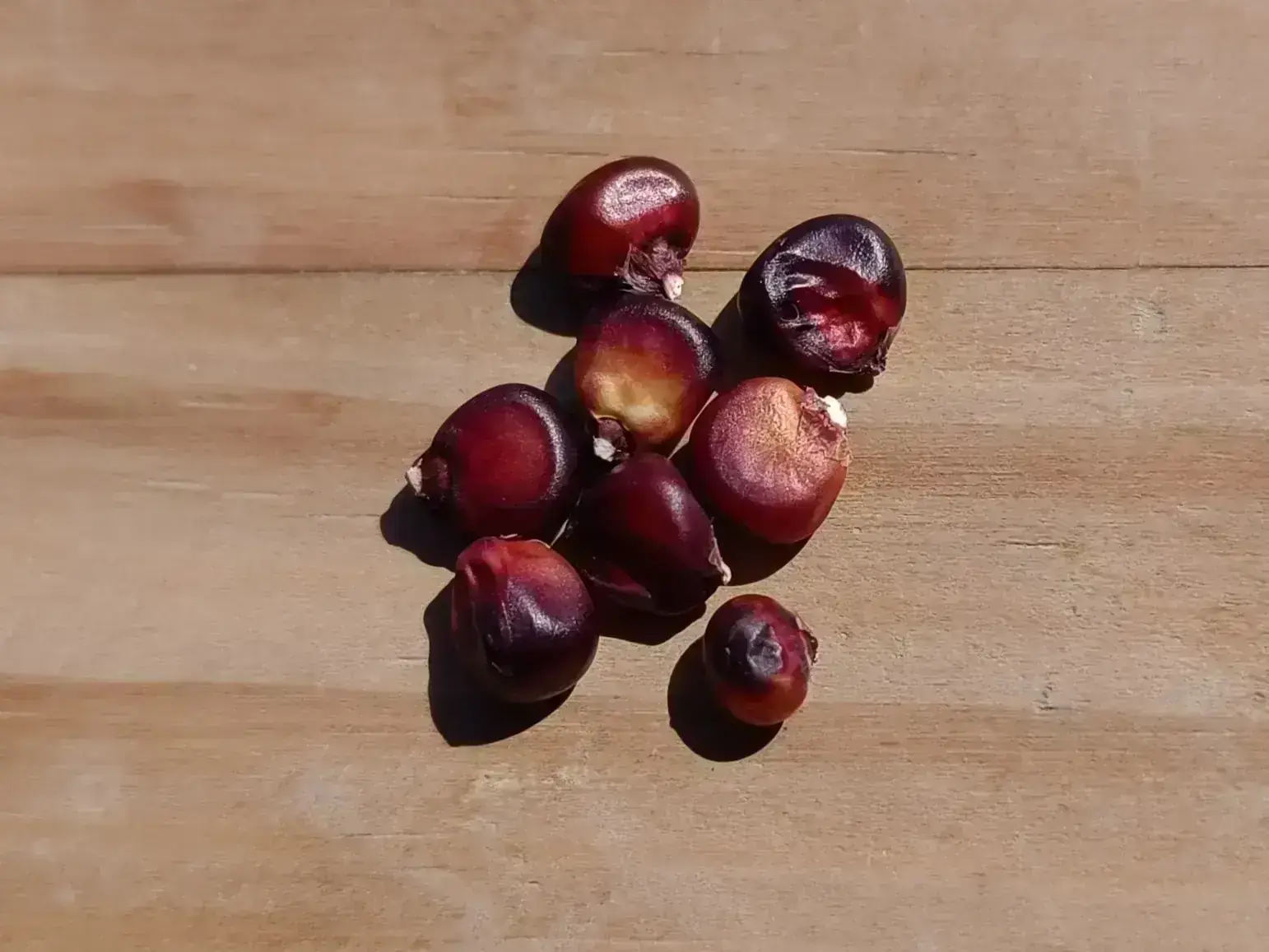
It is an annual herbaceous plant with an upright and graceful habit, reaching between 1.2 and 1.8 meters in height, with vigorous growth and an open, arching form. Its leaves are long, broad, ribbon-like, and lanceolate, with the characteristic variegation that gives it its name and makes each plant slightly different. The tassels or male inflorescences are a striking wine burgundy color, and the ears it produces are small, with kernels in shades of dark crimson to black, highly decorative both on the plant and in dried arrangements.

The entire plant cycle, from sowing to ear harvest, is completed in approximately 85 to 95 days, making it an ideal choice for adding height, texture, and color to the vegetable garden or ornamental border in a single season.

History & Origin

Corn (Zea mays) is one of the world's oldest cultivated plants, domesticated over 9,000 years ago in southern Mexico from teosinte (Zea mays ssp. parviglumis), a wild grass that looks very different from modern corn. Its domestication was a milestone of Mesoamerican civilization, sustaining empires such as the Olmec, Maya, and Aztec.

The japonica variety does not originate from Japan, despite its name. The designation japonica was assigned in the 19th century by European botanists who found similarities between the variegated foliage of this variety and certain Japanese ornamental plants with colored leaves, very fashionable in Victorian horticulture. Its true origin lies in ornamental corn varieties selected in the United States and Europe during the 19th and 20th centuries, when corn transitioned from being exclusively a food crop to also having aesthetic value in gardens.

The variegation of its leaves is the result of a natural genetic mutation affecting chlorophyll production in longitudinal bands, creating the characteristic striped pattern. This mutation was stabilized and selected by horticulturists who valued its decorative potential. Today, Japanese Striped Maize is a coveted piece in cottage-style gardens, ornamental vegetable gardens, and autumn floral arrangements, representing the perfect fusion between traditional agriculture and ornamental horticulture.

Ideal Companions

BeanSquashSunflowerCalendulaNasturtiumPeaDill

Avoid

CeleryBeetrootFennelOther corn varieties

Superfood

Although this variety is grown mainly for ornamental purposes, its kernels share the basic nutritional profile of corn: they are a good source of complex carbohydrates, fiber, and plant proteins. They provide B-group vitamins (especially thiamine and niacin), vitamin E, and minerals such as magnesium, phosphorus, and potassium. The dark-colored kernels contain anthocyanins, powerful antioxidants responsible for their crimson-black pigmentation. Per 100 g of dried grain, corn provides approximately 360 kcal, 9 g of protein, 7 g of fiber, and 5 g of fat, making it a naturally gluten-free energy source.

Preservation

Japanese Striped Maize ears are preserved mainly for ornamental purposes. Once the husks turn brown and dry, the ears are harvested and hung in a dry, dark, and well-ventilated place for 2 to 3 weeks to complete drying. Once dried, they last for several months or even years as decorative elements in floral arrangements, centerpieces, and wreaths. The kernels can also be shelled and ground to produce a dark-colored flour that keeps in an airtight container in a cool, dry place for up to 6 months. Fresh variegated leaves can be used in floral arrangements and last approximately one week in water.

Pest Monitoring

Pay special attention to: Aphid, corn borer, whitefly, spider mite, rust, corn smut.

FAQ

Is it edible

Yes, the kernels are edible, although they are not as sweet or tender as sweet corn. They can be ground to make a striking dark-colored flour, used as popcorn, or eaten toasted. Its main value is ornamental, but it also has culinary utility.

Why is it called Japanese if it originated in America

The name japonica does not refer to its geographic origin but was coined by 19th-century botanists who associated the variegated and elegant appearance of its leaves with Japanese ornamental plants that were fashionable in European Victorian gardens. All corn, without exception, originates from America.

Can it be grown in a pot

Yes, although it requires a large, deep pot (minimum 40-50 liters) so that the roots have enough space and the plant does not topple. Plant several specimens together in the same pot or group several pots in a block to ensure good pollination.

How to achieve well-striped leaves

Variegation is a stable genetic characteristic of the variety, but it can be attenuated if the plant receives too much nitrogen. To maximize the stripes, use a balanced fertilizer (not excessively nitrogen-rich), ensure full sun, and avoid severe water stress.

Does it work as a trellis for pole beans

Its sturdy stalks, reaching up to 1.8 meters, make it an excellent natural trellis for pole beans, sweet peas, and other twining plants, following the traditional Mesoamerican Three Sisters technique.

Notas

Japanese Striped Maize is much more than a food crop: it is a centerpiece in the summer ornamental garden. Its variegated leaves bring light and movement to beds and borders, its burgundy tassels add vertical drama, and its dark ears star in autumn and winter floral arrangements. It is a plant that embodies the idea that the useful can also be beautiful. Children are especially drawn to its exotic and colorful appearance, making it an excellent choice for school gardens and educational vegetable patches. Like all open-pollinated varieties, its seeds can be saved from year to year, provided cross-pollination with other corn varieties is avoided. It is also known as Japanese striped corn, zebra corn, and Striped Japonica Corn.