White-Stemmed Pack Choi - Complete Growing and Care Guide Penca Blanca

White-Stemmed Pack Choi - Complete Growing and Care Guide

Variety: Penca Blanca

Brassica rapa subsp. chinensis

About this Crop

White-stemmed pak choi (Brassica rapa subsp. chinensis), also known as pak choi, bok choy or Chinese cabbage with white stems, is a vegetable of the Brassicaceae family native to East Asia. Unlike other Chinese cabbages such as napa cabbage, pak choi does not form a compact head, which makes harvesting far easier and makes it one of the most accessible Asian crops for the home gardener.

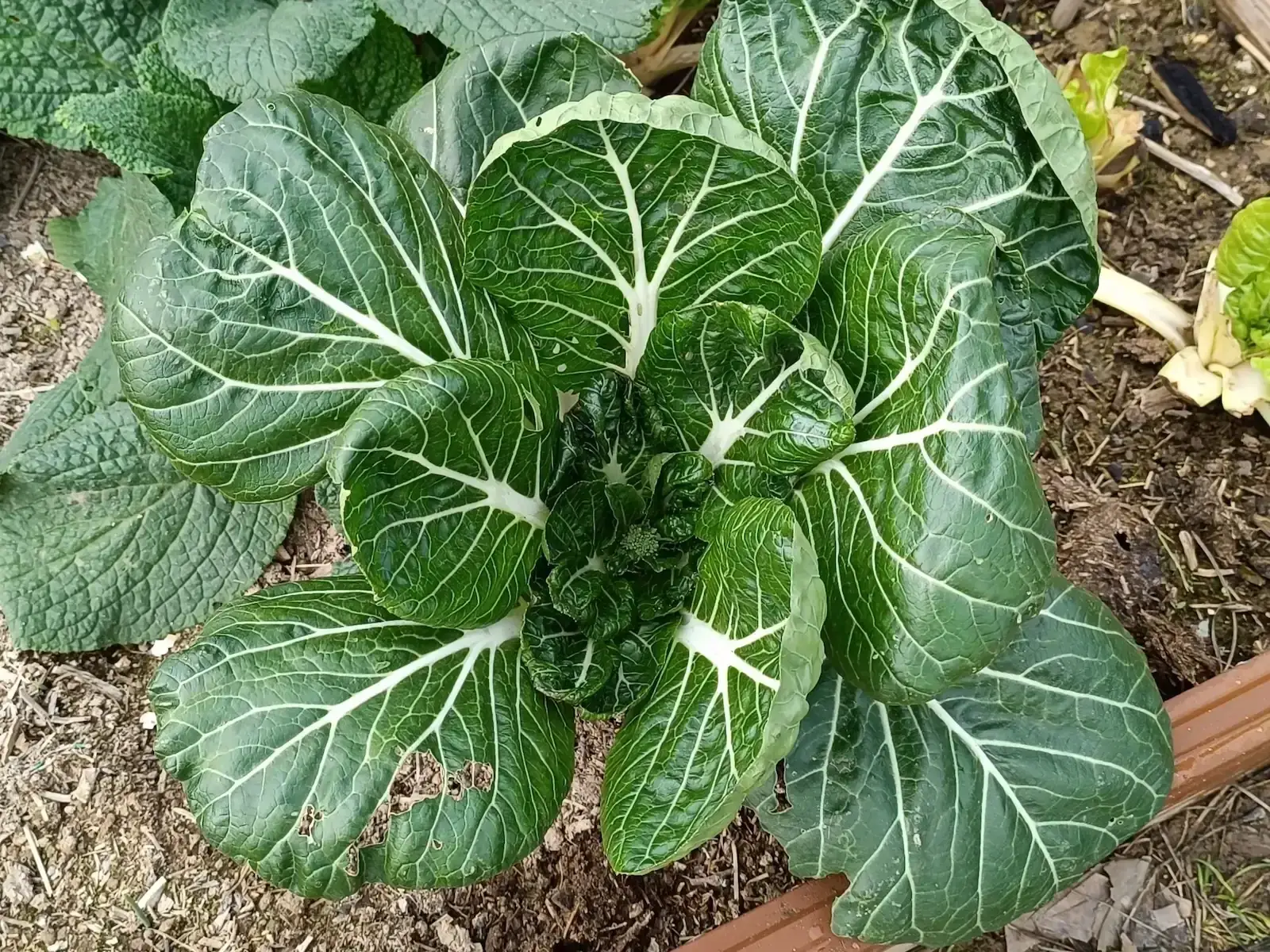
It is a plant of low and upright habit, forming an open rosette of dark green, oval and smooth leaves, held up by fleshy, crisp stems (petioles) of ivory-white colour that widen at the base. The leaves can reach 20 to 30 cm in height, with the whole plant spanning 25 to 35 cm in diameter. The flowers, which appear if the plant bolts, are typical of crucifers: small, yellow, with four petals in a cross shape.

The white-stemmed variety is the most widely grown and appreciated for its crispy texture and mild flavour, reminiscent of a cross between chard and mustard but much more delicate. It is a cool-season crop with a very fast cycle: from sowing to harvest can take just 40 to 50 days, allowing several harvests per year with good planning.

History & Origin

Pak choi (Brassica rapa subsp. chinensis) is a millennia-old crop from the Yangtze River basin in China, with domestication records dating back more than 1,500 years. Its Cantonese name bok choy (白菜) literally means "white vegetable", referring to its characteristic pale stems.

Unlike heading Chinese cabbage (napa cabbage or Brassica rapa subsp. pekinensis), pak choi was the original variety that travelled southwards through China and into Southeast Asia, adapting to warmer, more humid climates. For centuries it was a staple in Cantonese, Korean and Southeast Asian cuisines.

Its introduction to the West is relatively recent. Until the 1980s and 1990s, pak choi was virtually unknown outside the Chinatowns of major cities. The rise of Asian cuisine and interest in exotic vegetables have made it an increasingly common crop in European vegetable gardens. Today it can be found in supermarkets, organic markets and seed catalogues.

In Spain, its cultivation is experiencing remarkable growth, especially in Mediterranean market gardens, where its short cycle and adaptation to autumn-winter growing make it very attractive for extending the season of fresh greens.

Ideal Companions

LettuceOnionGarlicDillCalendulaNasturtium

Avoid

BroccoliCauliflowerCabbageRadishTurnipOther brassicas

Superfood

Pak choi is a vegetable of very low calorie content (approximately 13 kcal per 100 g) with an exceptional nutritional profile. It is a notable source of vitamin C, vitamin A (as beta-carotenes), vitamin K and folic acid (vitamin B9). As for minerals, it provides significant amounts of calcium, potassium and magnesium. Its fibre and water content make it a very filling and digestible food. It contains glucosinolates, sulphurous compounds typical of crucifers with documented antioxidant and anti-cancer properties.

Preservation

Pak choi is a moderately perishable vegetable that should be eaten relatively soon after harvest. It keeps in the fridge, in the least cold part, inside a perforated plastic bag or wrapped in damp kitchen paper, for 1 to 2 weeks. Do not wash it until you are ready to use it. For longer storage, it can be blanched briefly (1-2 minutes) and frozen. It can also be pickled or fermented in the Korean style (kimchi) for months of preservation.

Pest Monitoring

Pay special attention to: Aphid, whitefly, cabbage caterpillar, slug, snail, alternaria, downy mildew.

FAQ

Are pak choi and bok choy the same thing?

Yes, they are the same vegetable. Pak choi or bok choy are two different romanisations of the Cantonese name 白菜 (baak choi). The spelling "pak choi" is more common in the UK and Europe, while "bok choy" is dominant in the United States.

Can it be eaten raw?

Yes, especially the tender baby leaves. They have a mild, slightly mustardy flavour, very pleasant in salads. Mature leaves and stems can also be eaten raw although they are more fibrous; many people prefer them lightly cooked.

Why does it bolt so quickly?

Pak choi is very sensitive to heat stress and long photoperiods. Temperatures above 25 °C or days with more than 14 hours of light trigger flowering. The solution is to grow it in autumn or very early spring, avoiding the hot months.

Can it be grown in a pot?

Yes, it adapts well to pots of at least 20-25 cm depth and 20 cm diameter per plant. It needs rich potting mix and frequent watering. Being compact in habit, it is an excellent candidate for urban gardens and balconies.

Notas

White-stemmed pak choi is probably the most rewarding Asian vegetable to start growing in this category. Its ultra-short cycle (40-50 days), cold hardiness and versatility in the kitchen make it a must for the autumn-winter vegetable garden. Unlike other cabbages that need months of growing and take up lots of space, pak choi is compact, fast and generous. What's more, its beauty —those ivory-white stems contrasting with the deep green of the leaves— also makes it an ornamental plant in the garden. If you could only grow one Asian vegetable, make it this one.