Wild Rocket - Complete Guide Wild rocket

Wild Rocket - Complete Guide

Variety: Wild rocket

Diplotaxis tenuifolia (L.) DC.

About this Crop

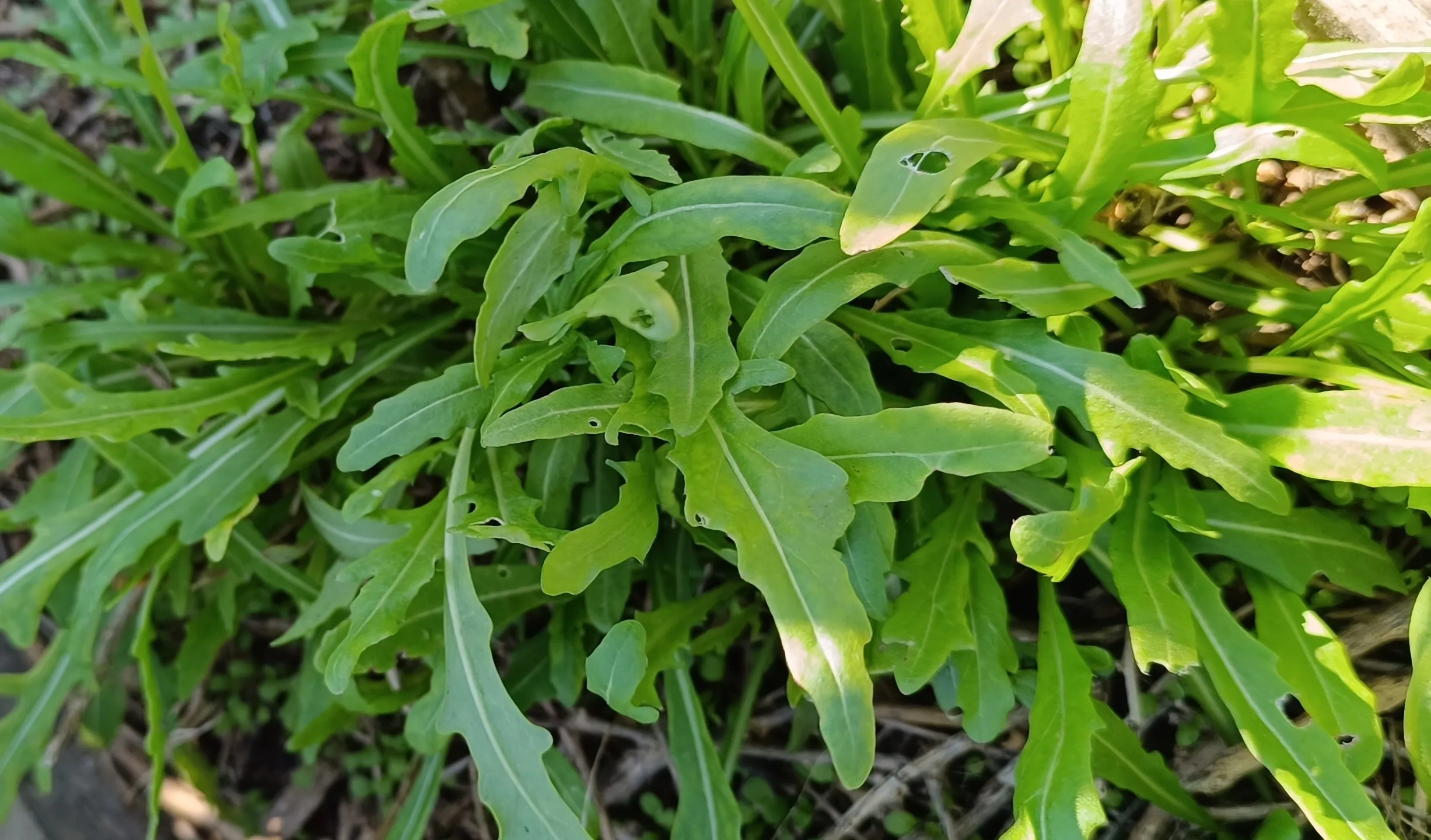
Wild rocket (Diplotaxis tenuifolia), also called perennial rocket, is a perennial herb in the Brassicaceae family. It is grown for its deeply divided green leaves, whose peppery flavour is stronger and more persistent than common rocket (Eruca vesicaria subsp. sativa).

It forms a 20 to 40 cm rosette and regrows after cutting. Its deep roots and perennial crown help it tolerate dry periods once established, although it needs regular moisture during germination and its first growing cycle.

Branched flower stems carry yellow, four-petalled flowers. Removing them keeps the plant producing more tender leaves; leaving some to mature produces elongated pods with small seeds.

History & Origin

Wild rocket is native to Europe, North Africa, and parts of western Asia, where it is part of ruderal and Mediterranean flora. Its leaves and flowers have traditionally been gathered from field margins and disturbed ground. Its strong flavour comes partly from glucosinolates, defensive compounds common to brassicas.

Mediterranean cooking, especially Italian cooking, uses it in salads, pizza, sauces, and pasta. Unlike common rocket, usually grown as an annual, Diplotaxis tenuifolia can remain in one place for several years and regrow after repeated cuts.

Ideal Companions

CarrotLettuceOnionLeekTomatoCalendula

Avoid

Planting after cabbagebroccolicauliflowerradishor turnip; extreme heat; prolonged drought during establishment

Superfood

Wild rocket is low in calories and provides water, fibre, folate, vitamins C and K, and carotenoids. It also contains calcium, potassium, and sulphur compounds typical of brassicas. People taking anticoagulants should keep vitamin-K intake consistent and follow medical advice.

Preservation

Pick leaves in the morning and refrigerate them unwashed in a slightly damp cloth or ventilated container. Use them within a few days. Leaves can be blanched and frozen, although they will be less crisp.

To save seed, let some pods dry on the plant, collect them before they fully open, and finish drying them in a ventilated place. Store clean seed airtight, dry, and dark.

Pest Monitoring

Pay special attention to: Aphid, flea beetle, cabbage caterpillar, whitefly, slug, downy mildew, Alternaria.

FAQ

**Is it the same as common rocket?** No. Wild rocket is *Diplotaxis tenuifolia*; common rocket is *Eruca vesicaria* subsp. *sativa*. Wild rocket is perennial, has narrower lobed leaves, and tastes stronger.
**Does it return each year?** Yes, if the crown is not pulled up and drainage is good.
**How long does it take to grow?** Young leaves are usually ready four to six weeks after sowing; established plants regrow faster.
**Can it grow all year?** In mild climates it can produce leaves for much of the year. In Zaragoza, spring and autumn are best.
**Why is it so strong?** Heat, drought, flowering, and old leaves increase pungency.
**What should I do when it flowers?** Harvest leaves, cut flower stems, or leave some flowers for seed and pollinators.

Notas

Wild rocket is useful when you want a peppery leaf that regrows after several cuts. Do not gather it beside roads or from treated soil, where it may accumulate contaminants. Rotate it with other brassicas and do not rely on companion planting alone to prevent pests.