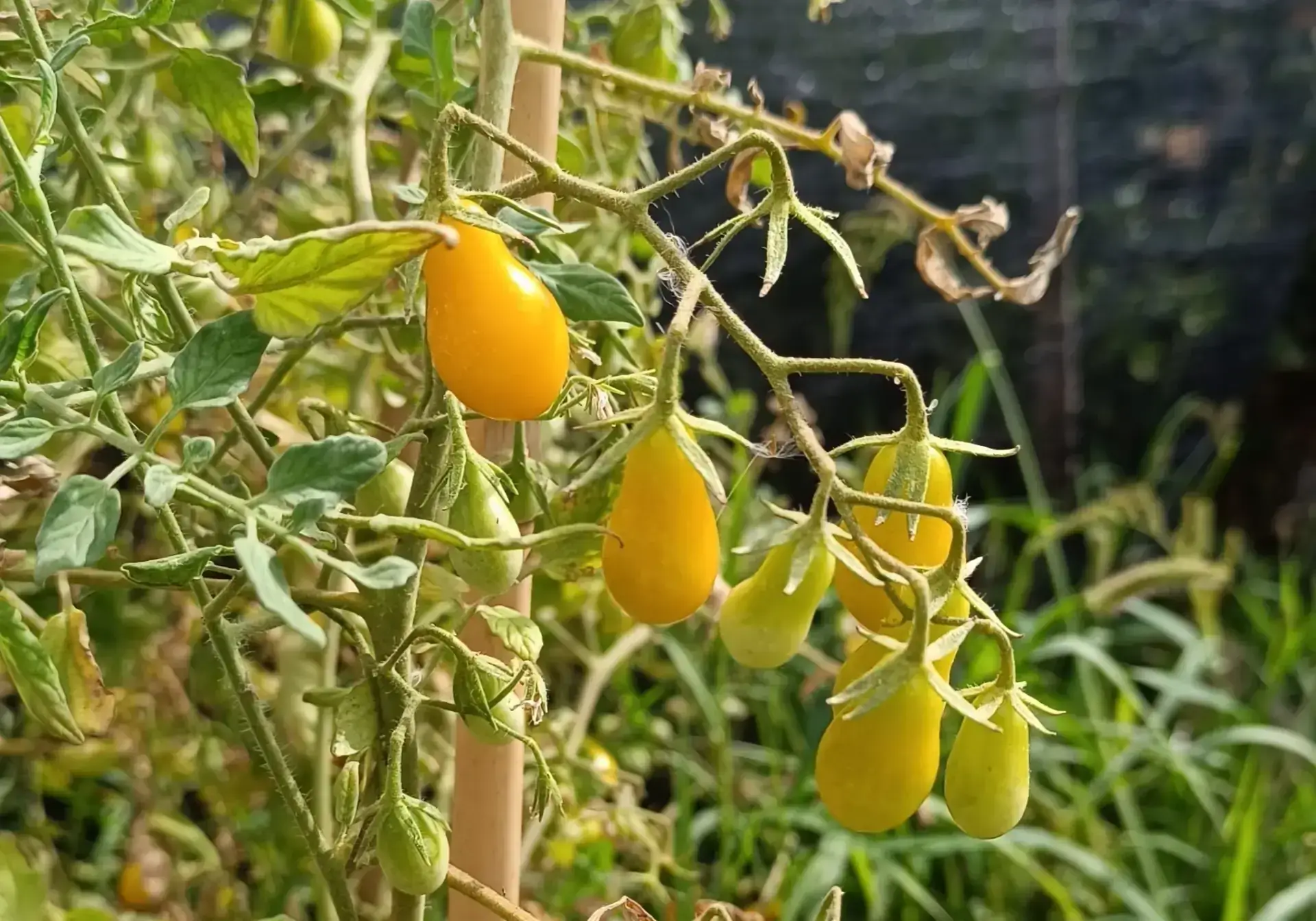
Yellow Pear Cherry Tomato - Complete Growing and Care Guide Cherry pera amarillo

Yellow Pear Cherry Tomato - Complete Growing and Care Guide

Variety: Cherry pera amarillo

Solanum lycopersicum

About this Crop

The Yellow Pear Cherry Tomato is a traditional (heirloom) cherry tomato variety, characterized by its small pear or teardrop-shaped fruits of a striking golden yellow color and its sweet and mild flavor, with lower acidity than red cherry tomatoes. It is one of the oldest and most appreciated cherry tomato varieties.

It belongs to the Solanaceae family, the same as potato, eggplant, and pepper. It is an indeterminate growth plant: it continues growing and producing fruit throughout the season until the first frosts, potentially reaching 2-3 meters in height if properly staked. Its stems are vigorous and branched, with dark green pinnate leaves and a characteristic tomato aroma.

The fruits, between 2 and 4 cm in length, have a thin, shiny skin, firm but juicy flesh, and a sweet and fruity flavor with a slightly acidic touch. Each cluster can produce 8 to 15 tomatoes, and a single plant can produce hundreds of fruits throughout the season. Its yellow color is due to the presence of beta-carotenes instead of lycopene (the red pigment).

History & Origin

The tomato is native to South America, where its wild ancestors grew in the Andes region (Peru, Ecuador, Bolivia). The cherry variety (Solanum lycopersicum var. cerasiforme) is the closest form to these wild ancestors and is considered the proto-form of all cultivated tomatoes.

The tomato was domesticated in Mexico over 2,500 years ago, where Mesoamerican peoples selected and cultivated larger-fruited varieties. It arrived in Europe after the conquest of America in the 16th century. Initially, it was cultivated as an ornamental plant due to suspicions that it was toxic (because of its kinship with belladonna). It was not until the 18th century that its consumption became widespread in Mediterranean cuisine.

The Yellow Pear Cherry Tomato (Yellow Pear) is one of the oldest preserved tomato varieties, with records dating back to the 18th century in Europe. It was introduced to the United States in the early 19th century and has since remained a favorite of gardeners for its productivity, resistance, and flavor. The American botanist Thomas Jefferson grew this variety in his garden at Monticello.

Ideal Companions

BasilMarigoldGarlicOnionNasturtiumParsleyCarrotBorage

Avoid

PotatoEggplantPepperCabbageBroccoliFennelCorn

Superfood

The Yellow Pear Cherry Tomato is a low-calorie food (approximately 18 kcal per 100 g) and an excellent natural hydrator (contains more than 94% water). It is rich in vitamin C (about 100 g provides 30% of the recommended daily intake), vitamin A in the form of beta-carotenes —which give it its characteristic yellow color— and vitamin K. It also provides potassium, an essential mineral for muscle and cardiovascular function, and fiber. It contains antioxidants such as quercetin and kaempferol, beneficial for cardiovascular health. Unlike red tomatoes, yellow ones have less lycopene but more bioavailable beta-carotenes.

Preservation

Cherry tomatoes keep best at room temperature, in a cool, dry place, away from direct sunlight, for up to one week. Refrigeration is not recommended if they will be consumed within a few days, as cold alters their texture and reduces their flavor. If very ripe, they can be refrigerated for up to 3-4 days, but should be taken out 30 minutes before eating to recover aroma. For long-term preservation, they can be frozen whole (no need to blanch) and used directly in sauces and stews, or dehydrated in the sun or in a low oven, preserved in olive oil with herbs for months.

Pest Monitoring

Pay special attention to: Aphid, whitefly, red spider mite, caterpillar, downy mildew, blossom end rot.

FAQ

Why do my cherry tomatoes split or crack

Cracking is due to irregular watering: when the plant receives a lot of water after a dry period, the fruits swell faster than the skin can stretch. Maintaining constant watering and mulching the soil helps prevent it.

Do cherry tomatoes need pruning

Unlike large tomatoes, cherries do not require strict pruning. They can be left to grow freely or only the lower suckers can be removed to improve air circulation. Production is not significantly affected.

Can they be grown in a pot

Yes, cherry tomatoes are ideal for large pots (minimum 20 liters) or grow bags. They need a stake, nutrient-rich substrate, and frequent watering. The Yellow Pear variety adapts well to container growing.

How to know when they are ripe

Yellow Pear Cherry Tomatoes are ripe when they acquire a uniform golden yellow color and detach easily from the cluster with a gentle pull. Unlike red tomatoes, they do not change to a more intense shade, so one must go by the bright golden color.

Notas

The Yellow Pear Cherry Tomato is one of the most productive and resistant varieties among cherry tomatoes, ideal for both beginner and experienced gardeners. Its golden yellow color and pear shape make it an ornamental element in the garden and kitchen. Being an open-pollinated variety, seeds from the best specimens can be saved for next season. Unlike F1 hybrids, the seeds of this traditional variety produce plants identical to the mother. It is known in English as Yellow Pear Tomato.