Zaragoza, 6 August 2026. Three days have passed since we started the autumn seedlings, and we can already record the first shoots. During today's inspection we found seedlings of Romanesco Natalino, Virtudes 3 Savoy cabbage, Brussels sprout, Asa de Cántaro cabbage, Nero di Toscana kale and pak choi.
This entry continues the record of sowing cabbages, kales and other autumn crops. There we recorded the inventory of the four boxes, nine trays and 108 cells sown on 3 August. We are now replacing expectations with observations from the seed trays themselves.
The first shoots appear on the third day
The trays have not all responded at the same time. The first shoots we have identified belong to these sowings:
- Romanesco Natalino.
- Virtudes 3 Savoy cabbage.
- Brussels sprout, Medio Enana de la Halle.
- Asa de Cántaro Selección Mirandela cabbage.
- Nero di Toscana kale.
- Pak choi.
We have not yet observed shoots in the rest of the seed trays. The other kale varieties, cauliflower, Oxheart cabbage, beetroot, mustards and spinach have not emerged so far. After only three days, we cannot interpret that difference as a failure: every crop has its own rhythm, and we will continue checking the cells over the coming days.
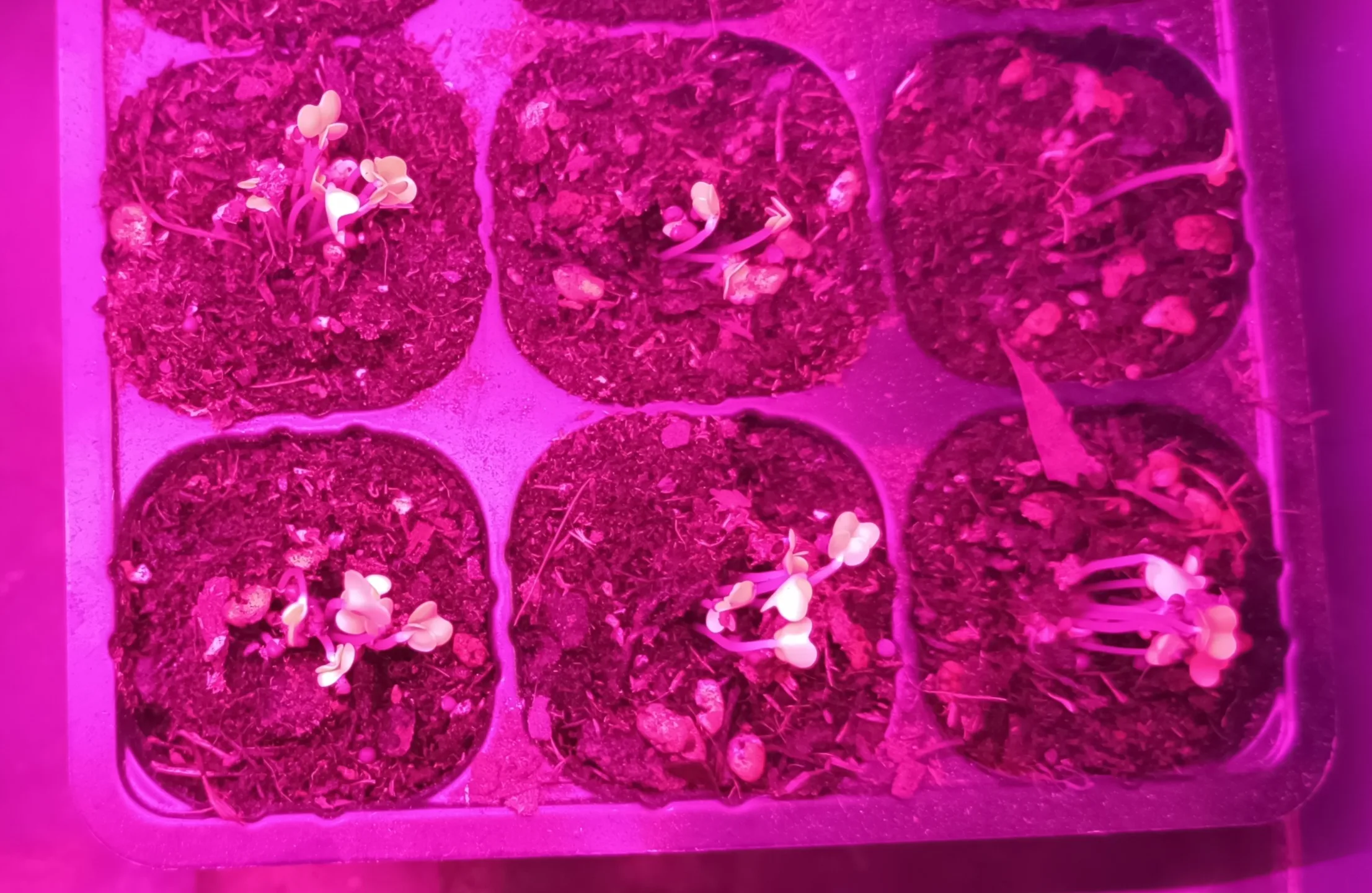
First shoots of cabbages, kales and pak choi three days after sowing.
How we have kept the trays during these first days
Heat remains the main constraint for this sowing. During the first days, the temperature stayed between 30 and 32 °C inside, where we started the trays. This location has allowed us to observe moisture more closely and avoid exposing the newly emerged shoots suddenly to intense sunlight and the outdoor maximum temperatures.
To keep the growing medium moist, we watered from the bottom of the trays. We let the water rise into the cells instead of wetting the surface directly. This allowed us to preserve moisture without disturbing the seeds or shifting the shoots as they began to emerge.
It is still too early to compare germination percentages, vigour or uniformity. What we can already record is the date when the first shoots appeared and the box, tray and crop to which each one belongs.
The three photographs in this update show the state of the seed trays during this first inspection:
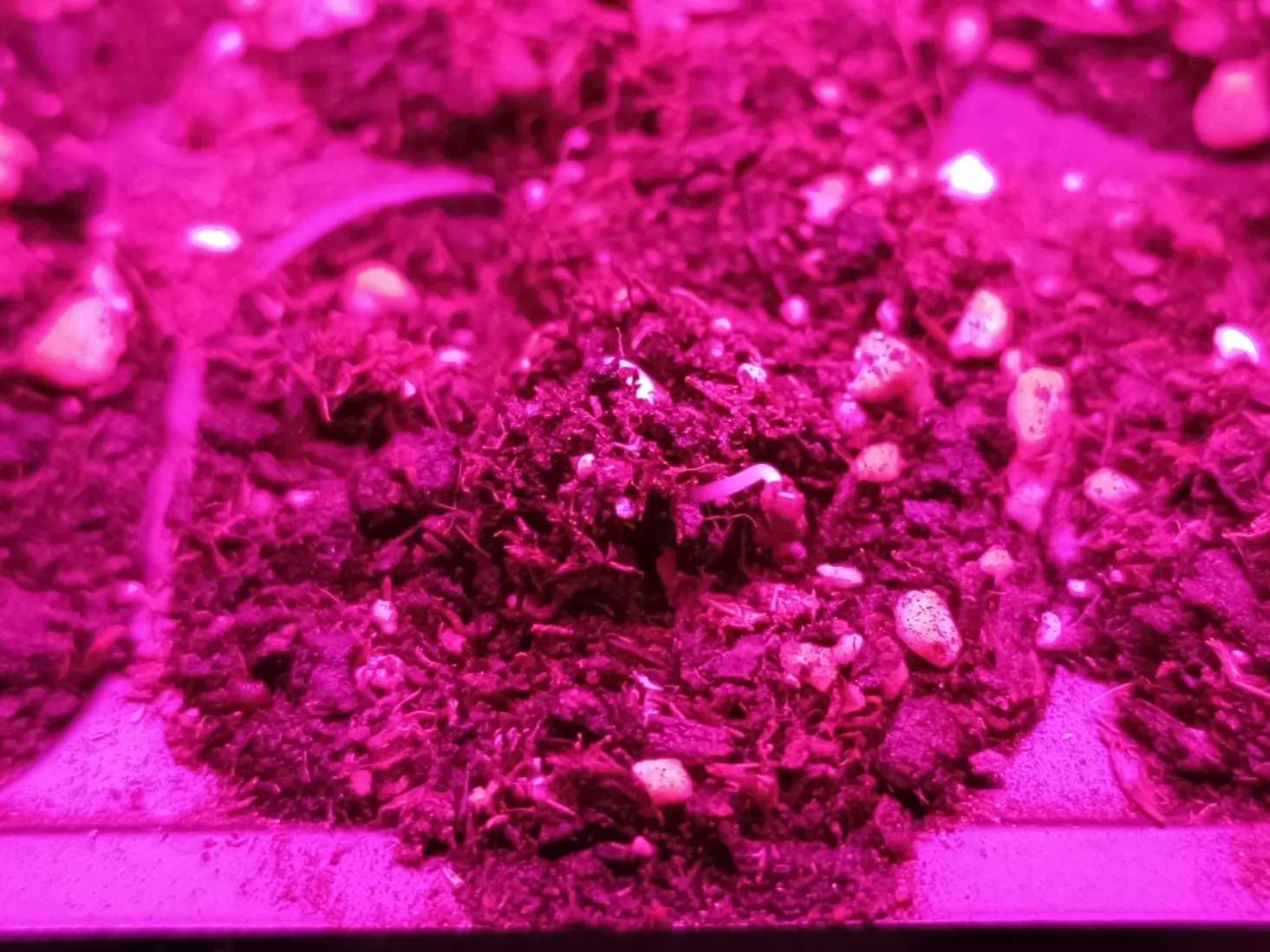
First shoots of cabbages, kales and pak choi in the seed trays.
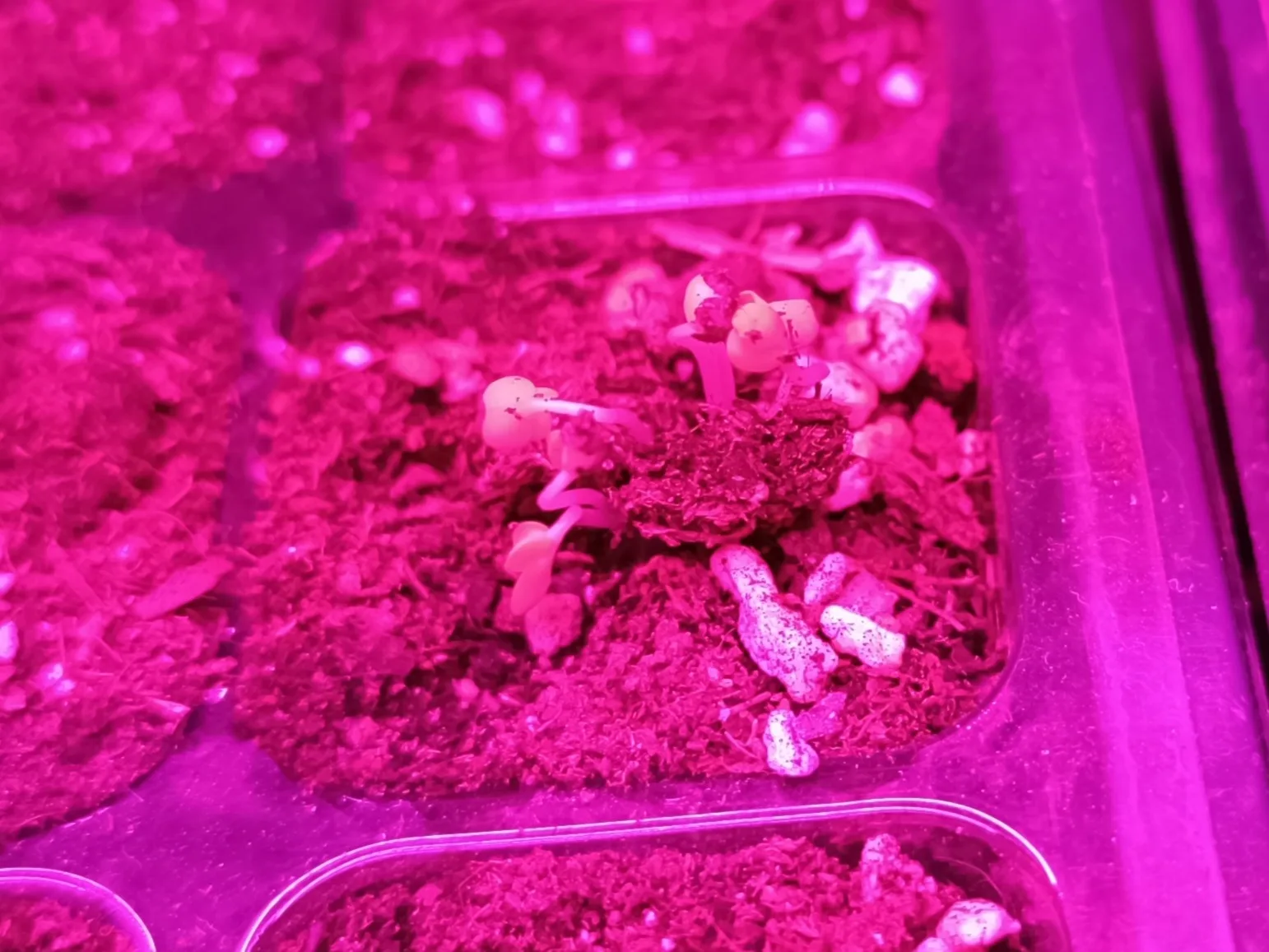
First shoots observed during the inspection on 6 August 2026.
What we can say for now
The first inspection confirms that six sowings have begun to emerge on the third day, with an indoor temperature between 30 and 32 °C and watering carried out from the bottom of the trays. This is a useful first piece of data, but it does not yet allow us to assess the overall germination result.
We do not yet know whether the remaining varieties will appear in the next few hours or need more time. Nor can we compare seedling uniformity until enough cells have emerged. Daily monitoring will tell us the difference between fast germination and slower germination that is still viable.
Next follow-up
Over the next few days we will inspect every tray and record new shoots as they appear. We will keep controlling moisture by bottom-watering and continue recording the temperature inside.
When maximum temperatures fall below 35 °C, we will move the trays outdoors gradually. That is when the two-week hardening period planned in the first entry will begin, before we decide when to transplant.
The next record will include germination from the remaining crops, the number of emerged cells and the appearance of the first seedlings. For now, the field journal has reached its first milestone: the seed trays are alive, and we can follow their development from the first shoots.

