Zaragoza, 3 August 2026. Today we have started the seedlings of brassicas, beetroot and spinach that will become part of the autumn and winter garden. The summer garden still occupies much of the available space and is enduring the hottest days of the year, but the next plants already need their place.
The date is not the same for every variety or every climate. This article records what we are doing in our Zaragoza garden: germination, seedling growth and transplanting will be checked over the coming weeks.
When to sow cabbages in Zaragoza
On 3 August we decided to start the cabbage seedlings and other autumn crops. The aim is for the plants to reach transplanting at a suitable size when the heat begins to ease and space opens up in the summer garden.
The crop guides and the annual sowing and harvest calendar help us place the task. From now on, we will record how each crop responds and whether we need to adjust the location, watering or date when the trays go outdoors.
The challenge of raising cabbage seedlings in August
The intense midsummer heat leaves little room for error. Putting seed trays directly in the sun at this time would almost certainly end badly. With temperatures so high and so many consecutive days near the maximum, the soil in the cells would dry out within a couple of hours. We would have to water constantly, with the real risk of scorching the seeds before they could emerge or cooking the first shoots when the midday sun became strongest.
For that reason, we have started indoors, where we can check temperature and moisture more closely during the first days. We will later move the trays outdoors and complete two weeks of hardening there before transplanting.
There are no shoots to analyse yet. What we can record today is the sowing date, the inventory, the initial location and the criteria we will use to move the trays. The result of this sowing will depend on what happens over the coming days.
What we have sown: 108 cells of autumn crops
The sowing occupies 108 cells, distributed among four boxes and nine trays. This is the initial inventory:
| Box | Tray | Crop | Variety | Quantity (Cells) |
|---|---|---|---|---|
| Box 1 | Tray 3 | Romanesco | Natalino | 12 |
| Box 1 | Tray 4 | Savoy cabbage | Virtudes 3 | 12 |
| Box 1 | Tray 5 | Cauliflower | Violet | 6 |
| Box 1 | Tray 5 | Cabbage | Oxheart | 6 |
| Box 2 | Tray 1 | Brussels sprout | Medio Enana de la Halle | 12 |
| Box 2 | Tray 2 | Cabbage | Asa de Cántaro Selección Mirandela | 12 |
| Box 3 | Tray 6 | Kale | Red Curly Scarlett | 6 |
| Box 3 | Tray 6 | Kale | Nero di Toscana | 3 |
| Box 3 | Tray 6 | Kale | Dwarf Green Curled | 3 |
| Box 3 | Tray 7 | Pakchoi | - | 12 |
| Box 4 | Tray 8 | Beetroot | Gigante Blanca | 6 |
| Box 4 | Tray 8 | Mustard | Amsoi Rey Mostaza | 3 |
| Box 4 | Tray 8 | Mustard | Gigante Roja | 3 |
| Box 4 | Tray 9 | Spinach | Merlo Nero | 12 |
| Total | 108 |
We have combined cabbages, kales, pakchoi, mustards, beetroot and spinach. Each cell is linked to its box, tray, crop and variety so that we can compare germination and development when transplanting time arrives.
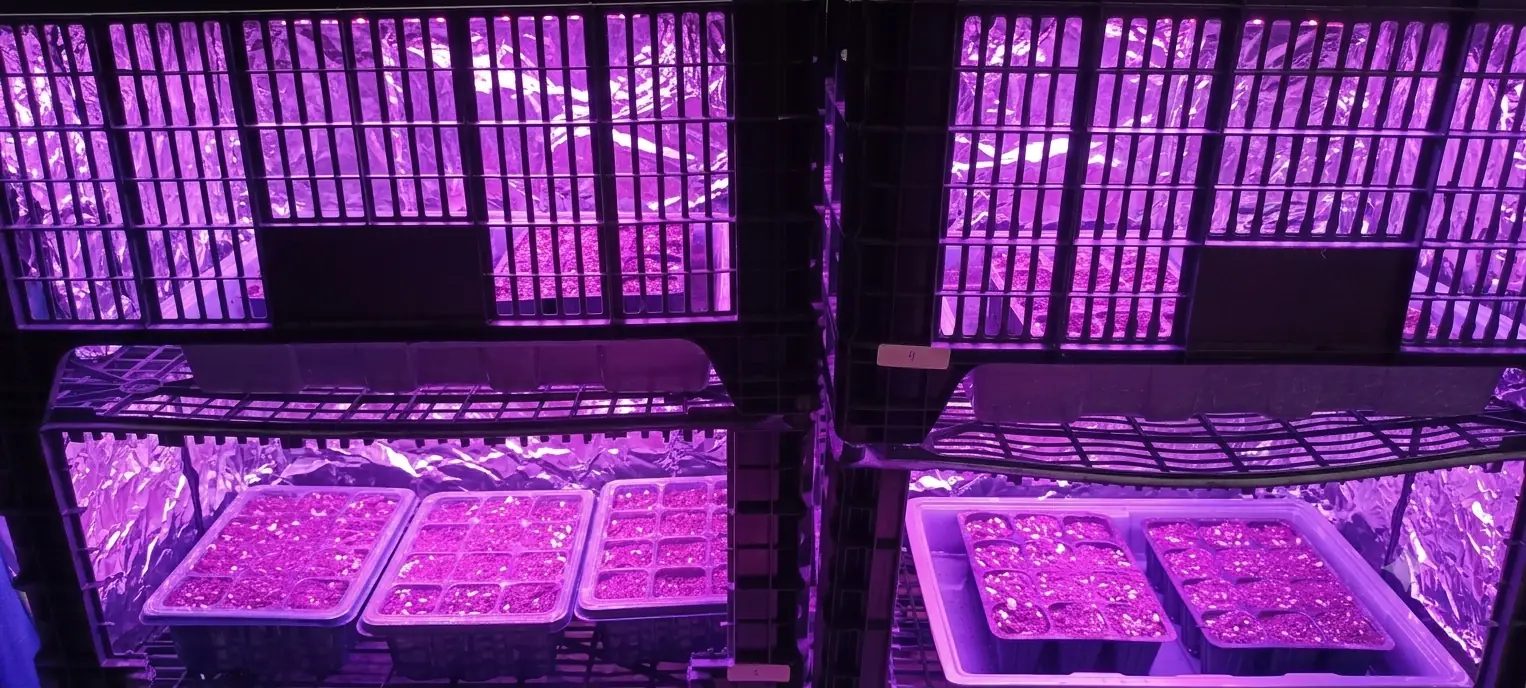
The four boxes and their respective trays prepared to start the autumn and winter seedlings on 3 August 2026.
How we will prepare the seedlings
During the first days we will keep the trays indoors, where we can check the temperature and the condition of the growing medium. We will prepare the mix, distribute the seeds according to the inventory and keep the labels for every combination visible.
When maximum temperatures begin to fall below 35 °C, we will move the trays outdoors. There they will complete two weeks of hardening before transplanting. The change will be gradual, allowing the seedlings to get used to light, wind and temperature changes in the garden.
During this first stage we will follow five points:
- Check the growing medium moisture and the indoor temperature every day.
- Keep every cell identified to preserve traceability.
- Move the trays outdoors when maximum temperatures fall below 35 °C.
- Complete two weeks of hardening before final transplanting.
- Record the first shoots and any change in location or watering.
What we expect to observe
The first datum will be the date when each crop begins to emerge. We can then compare germination rates, seedling uniformity and how each tray responds to changes in location and moisture.
We do not yet know which varieties will emerge first or whether they will all need the same treatment. That information will come from daily monitoring, not from a prediction made before sowing.
Can you raise cabbage seedlings in August?
Yes. In Zaragoza it is possible to prepare cabbage seedlings in August, but the heat means that moisture, temperature and tray location must be watched closely. In our case, we started indoors, will wait for maximum temperatures to fall below 35 °C before moving the trays outdoors, and will complete two weeks of hardening before transplanting.
The date may change in other areas or with other varieties. The local calendar, the exposure of the seedbed and the ability to check the growing medium are as important as the month of sowing.
What we can say for now
Today we have recorded the first decision of the autumn season: sow on 3 August and keep the trays under control during the initial phase. We have also defined the follow-up: check moisture and temperature, record the first shoots and move the trays outdoors when the weather allows it.
We cannot yet assess germination, uniformity or seedling adaptation. Those data belong to the coming entries.
Next follow-up
Over the next few days we will check every tray and record the first shoots by crop and variety. We will then decide when they have developed enough to begin outdoor hardening and prepare for transplanting.


