Zaragoza, Wednesday 5 August 2026. The Salduie melon is the result of chance and of letting nature do its work. It appeared spontaneously in a Zaragoza garden because two varieties grew together and pollinators moved freely between their flowers, bringing their genetic material into contact without human intervention.
This was not a controlled laboratory cross. We did not cover a flower with a bag or follow each grain of pollen. We simply saw a completely new melon appear when seeds saved from the previous season were germinated. Its characteristics combined those of our two varieties.
The result was named Salduie.
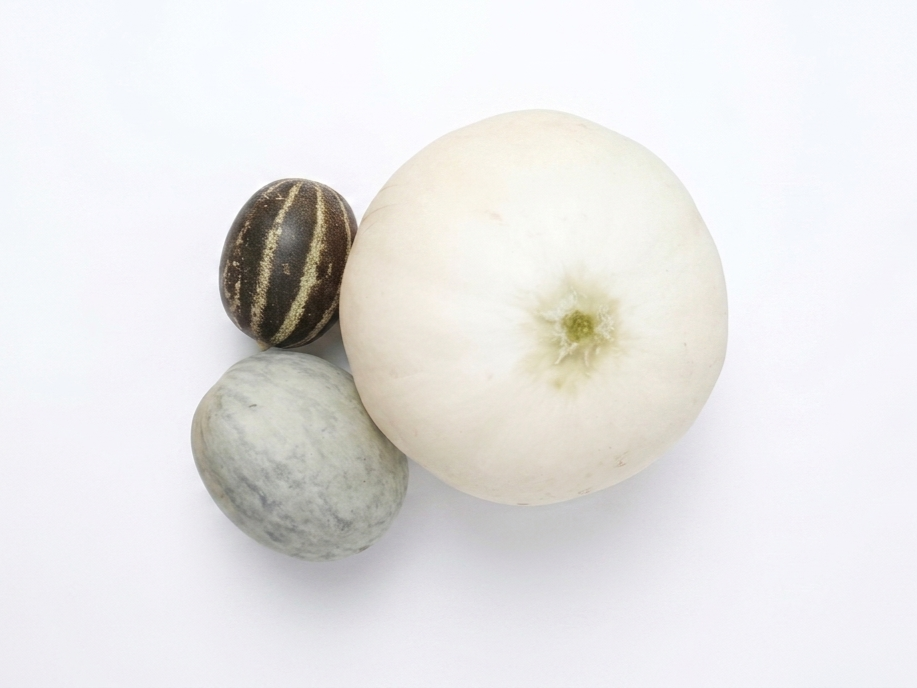
Salduie, a combination born when two melon lines grew in the same garden.
Two melons in the same garden
The documented mother plant was Ho Chi Minh, a melon of Vietnamese origin. The father was Cantaline, a commercial hybrid related to Cantaloupe and Honeydew.
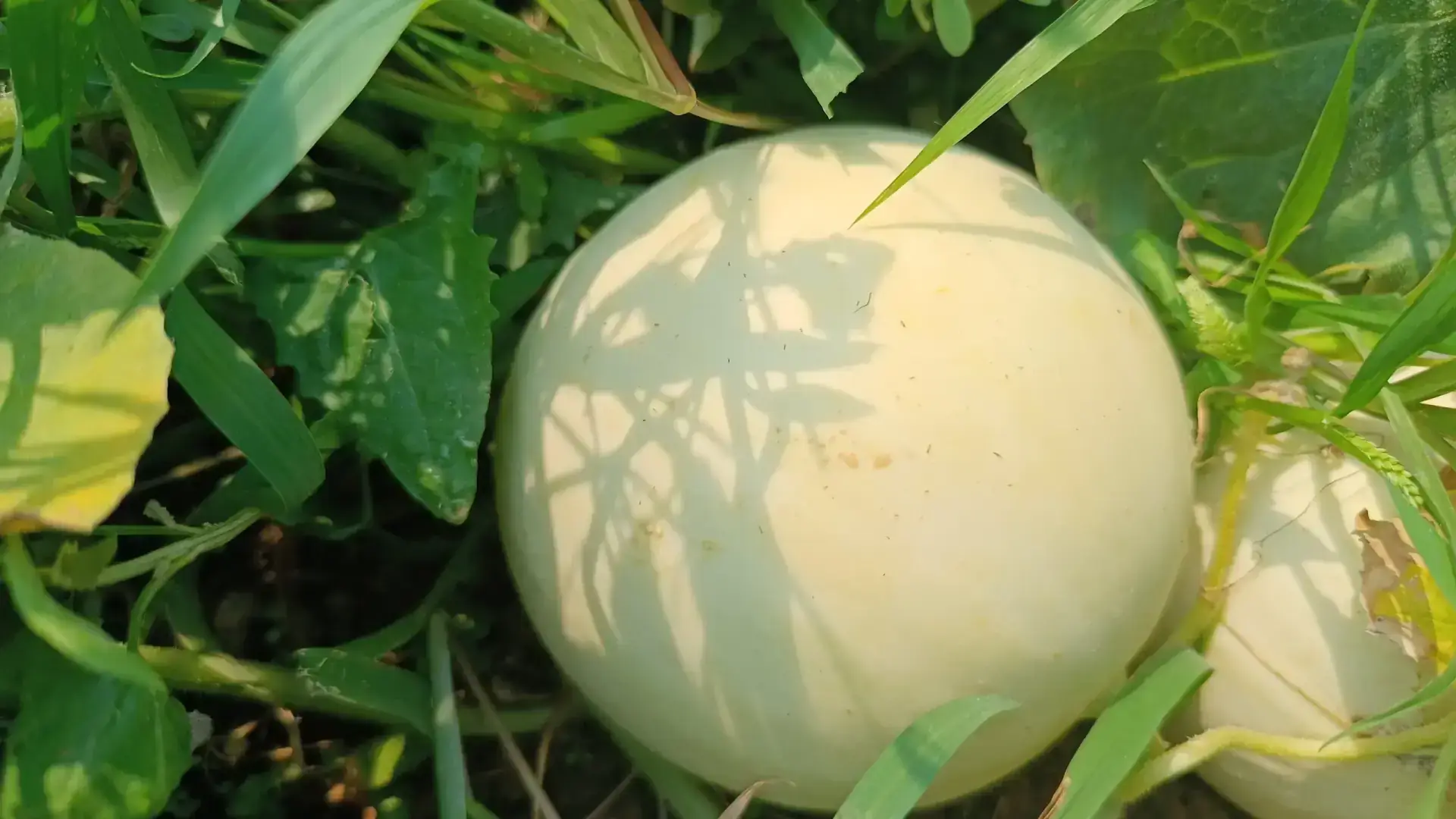
Cantaline contributes Cantaloupe and Honeydew ancestry, as well as a larger fruit and a different plant structure.
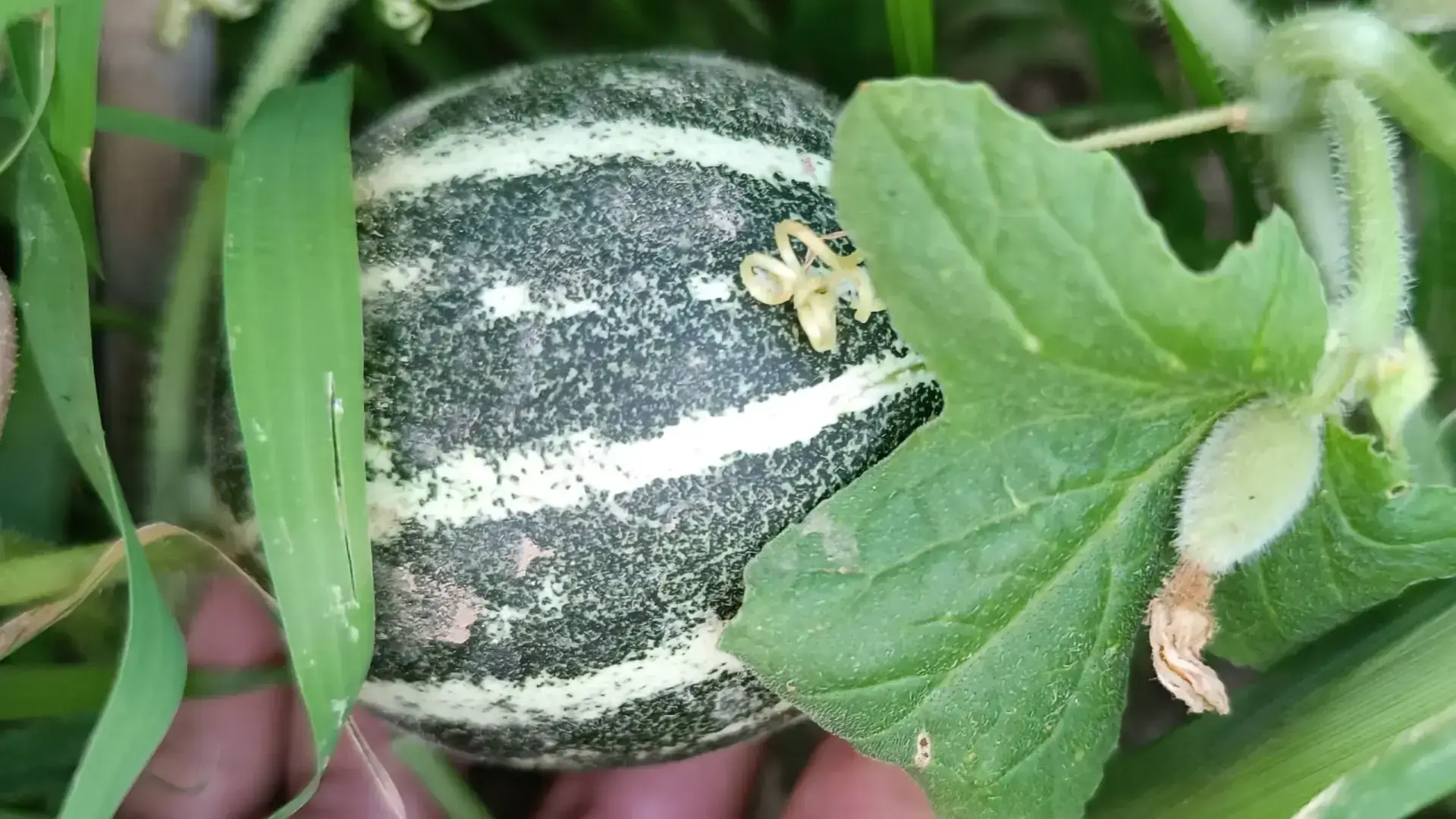
Ho Chi Minh is the documented mother plant: a small-fruited melon with vigorous growth, adapted to warm and humid conditions.
When two melons flower close together, bees, bumblebees and other insects can carry pollen from one flower to another. They are not following a breeding plan. They are looking for nectar and pollen, and their route can bring two lines together that nobody had deliberately crossed.
We did not directly observe the pollination in this case. That is why we describe it as open pollination documented through its evidence, not as an independent genetic test.
The combination that appeared in one seed
The fruit that grew on the Ho Chi Minh plant could look like that plant from the outside. The decisive information was in the seeds. When we sowed them in the following season, a combination of characteristics appeared that we identified as Salduie.
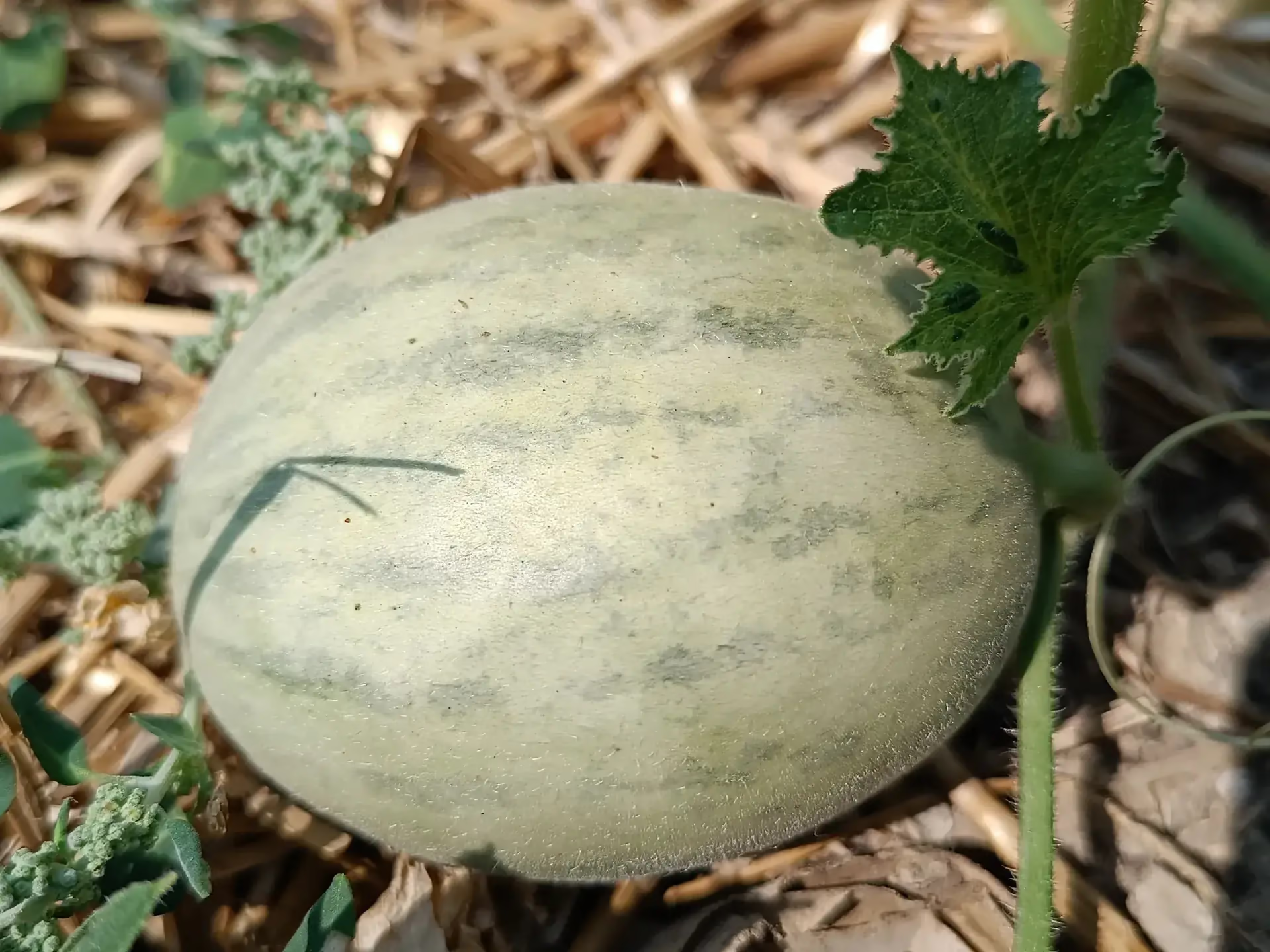
The fruit that gave rise to our project to create our own melon variety.
Ho Chi Minh × Cantaline: three lines of inheritance
The documented formula is:
Ho Chi Minh × Cantaline
Cantaline already carries Cantaloupe and Honeydew ancestry. Salduie is therefore described as a three-way cross, with an indicative composition of 50% Ho Chi Minh, 25% Cantaloupe and 25% Honeydew.
These percentages help explain the origin of the cross, but they cannot predict the appearance of every plant. Traits interact, and soil, climate and cultivation also have an effect.
In the project’s observations, Salduie has thin stems, a trailing habit, small fruits, pale skin and green markings.
The leaves also help us compare the parents
The difference between Ho Chi Minh and Cantaline can be seen throughout the plant, not only in the fruit.
Cantaline has large, rounded and lobed leaves in deep green. Ho Chi Minh has more elongated and cut leaves, described in its crop guide as resembling a fleur-de-lis.
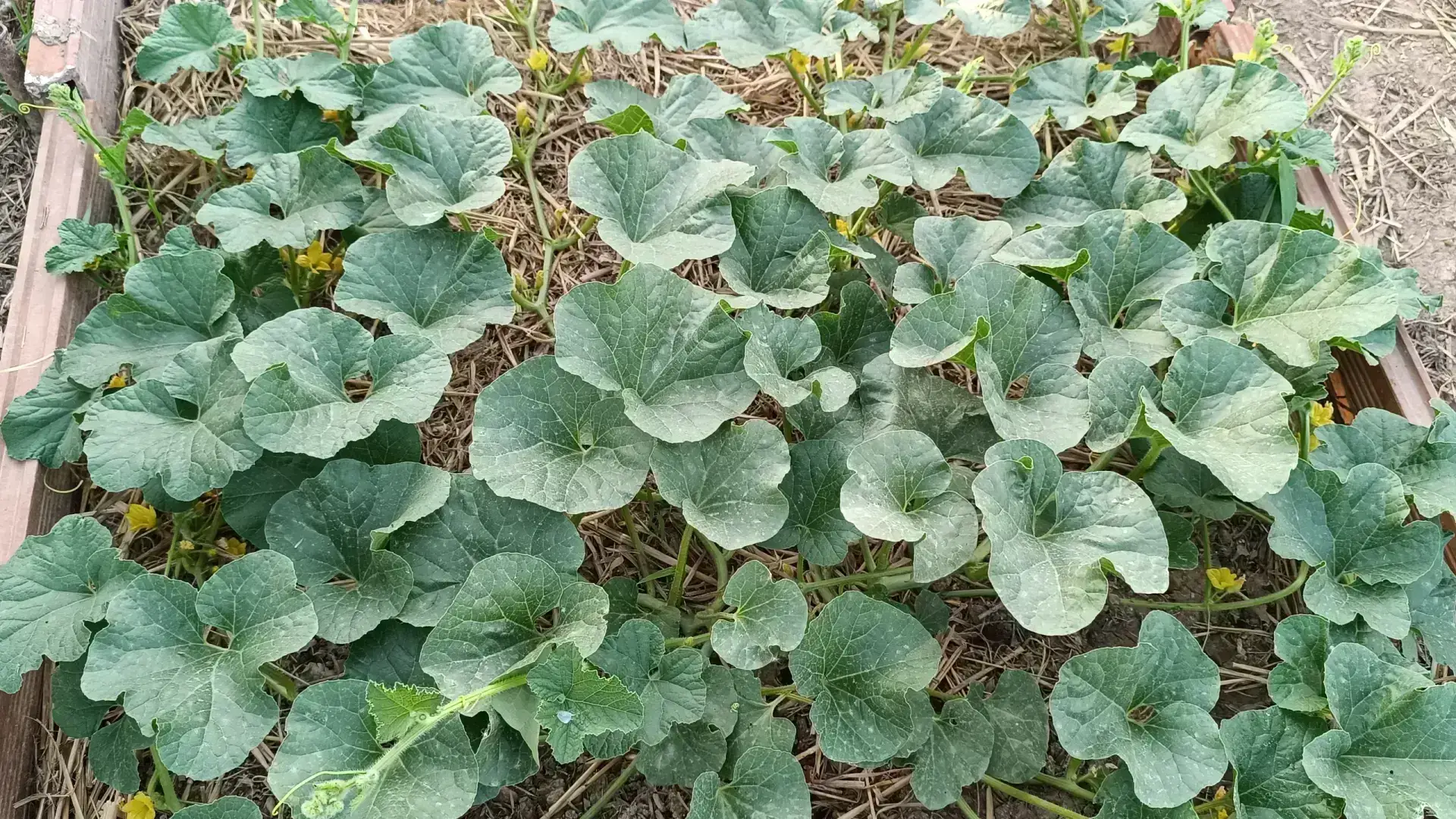
Cantaline: broad, lobed leaves with a rounded silhouette.
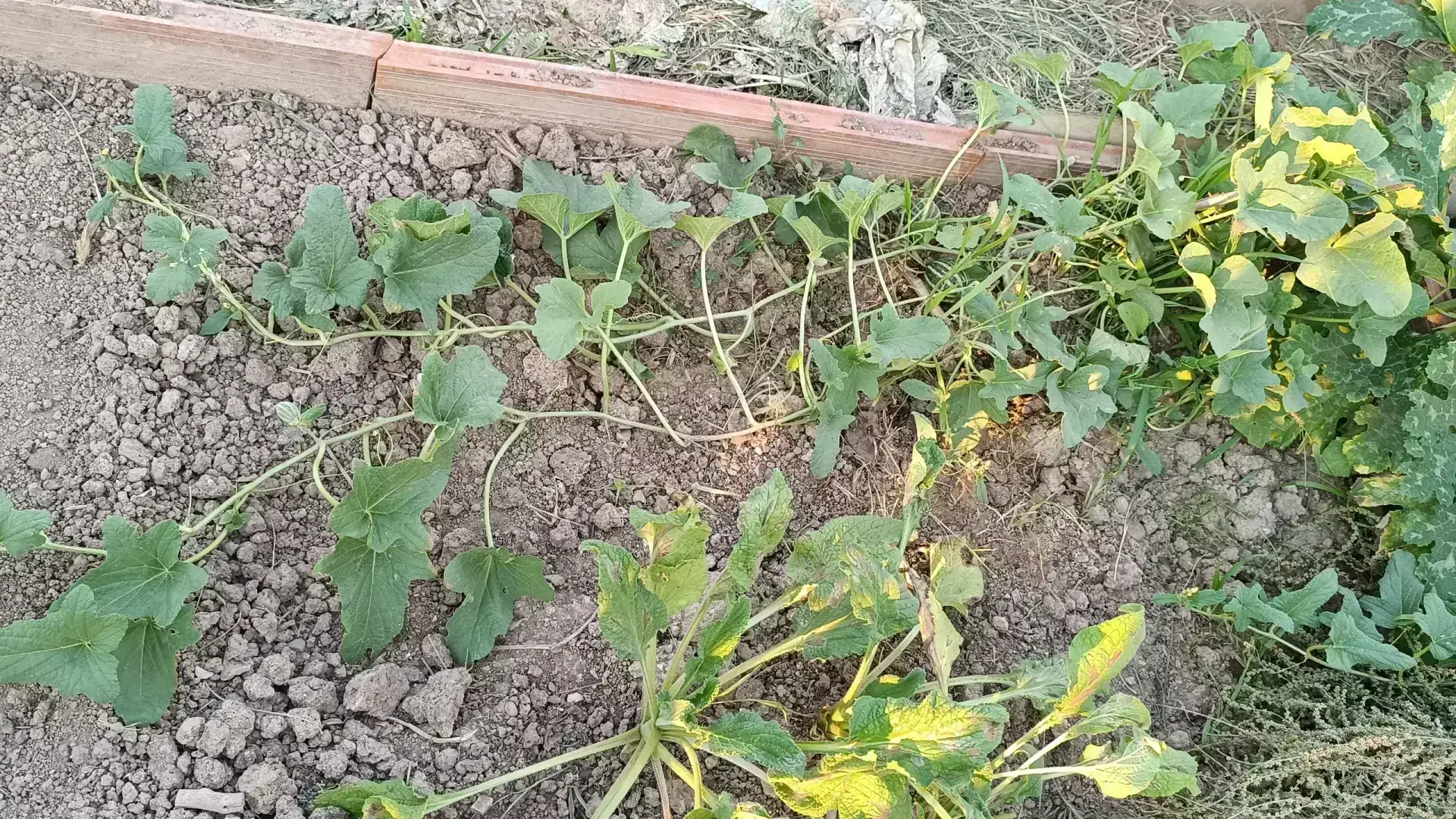
Ho Chi Minh: more elongated and cut leaves beside its small fruits.
The project describes Salduie as a visual combination of both parents: a trailing plant with thin stems and leaves showing intermediate features. A photograph cannot prove the genetic origin on its own, but it does show the characters we are following.
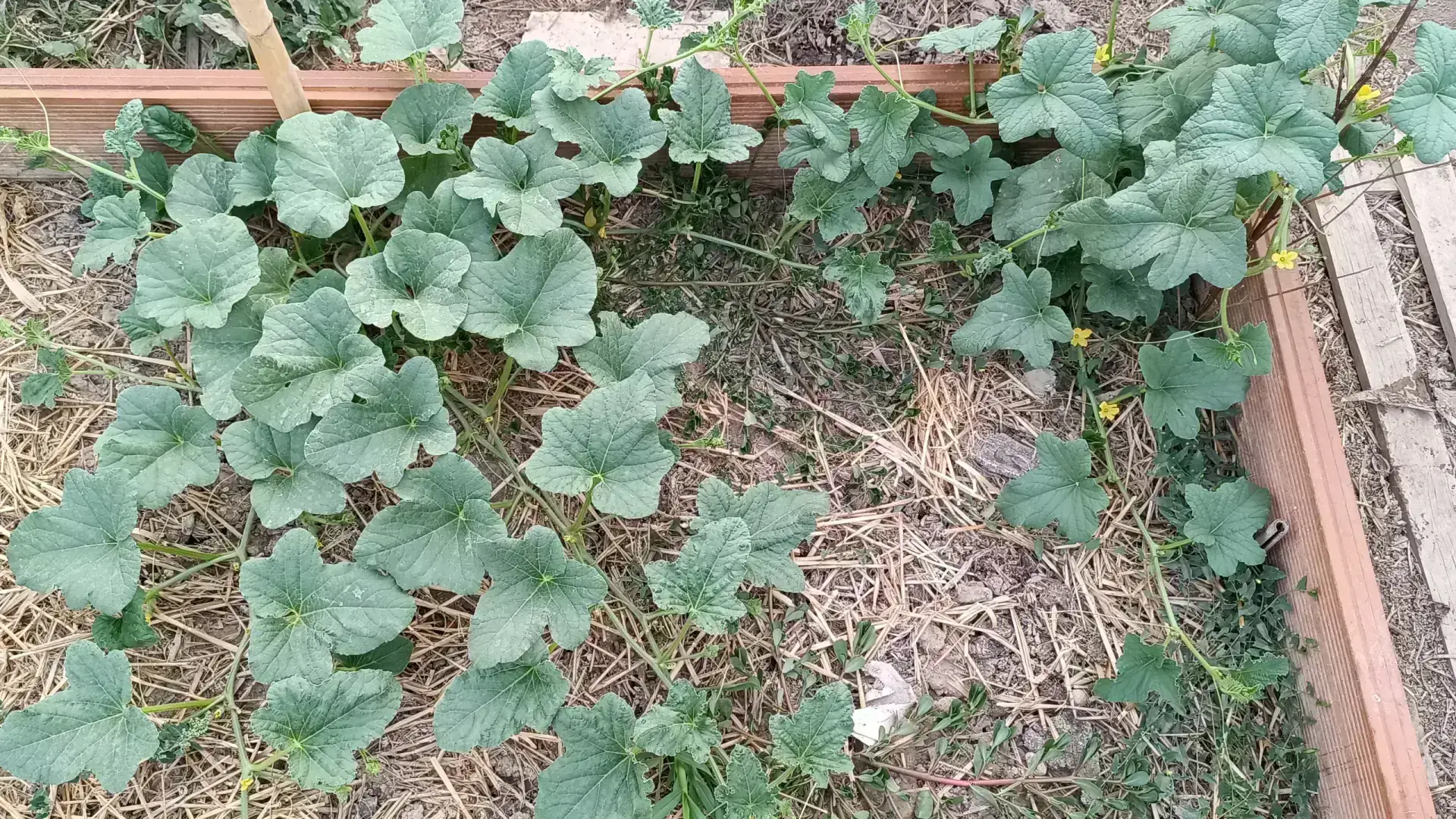
The Salduie plant: a morphology described as a visual mixture of its two parents.
Is it the only documented cross?
As far as our search has gone, we have not found independent public records of another Ho Chi Minh × Cantaline cross or of a commercial variety with this combination.
That does not prove that nobody has made a similar cross without leaving a record. Many home experiments never reach a catalogue, patent or database.
The claim we can make is narrower: Salduie may be the only documented cross between these two melon types. The possibility is interesting precisely because the cross was not designed from the beginning.
What may happen in the F2 generation
Salduie is considered an experimental F1 generation. Its seeds do not guarantee that the same fruit will appear next year.
When F1 seeds are sown, the F2 generation appears. Inherited traits recombine, and melons of different sizes, shapes, colours and flavours may emerge. Some may have pale skin; others may be green or netted. That is where we begin selecting fruits to decide the direction and identity of our variety.
Turning this diversity into a variety takes time. We must label the plants, record each fruit and save seeds from specimens we want to observe again. Selection takes place generation after generation.
From coincidence to a selection project
The name Salduie recalls the ancient Iberian city located on the site of Zaragoza. It pays tribute to this piece of land, where the fortunate coincidence took place and where the story began.
The story we know includes a Vietnamese melon, a commercial hybrid, a garden in the Ebro Valley, pollinators and a seed that carried the combination into the following season.
If you save Salduie seeds, you are not saving an exact copy. You are saving a possibility. Label every plant and record its size, shape, colour, flavour and harvest date. Then keep seeds from the specimens you want to study again.
The Salduie melon guide gathers the known growing conditions and observations. The garden calendar helps place the next sowing within Zaragoza’s climate.
Next follow-up
The next question is what diversity will appear when we sow the F2 seeds. To answer it, we will have to grow, label and compare every plant.
A new melon can appear without anyone designing it in advance. The work begins afterwards: being there, observing it and saving the seed that deserves to continue.
Want to grow it? Read the full Salduie melon guide.


